ĆUK RT 20 HF SSB STATION ON 34.255 MHz and 34.345 MHz
with Rectifier ND-06
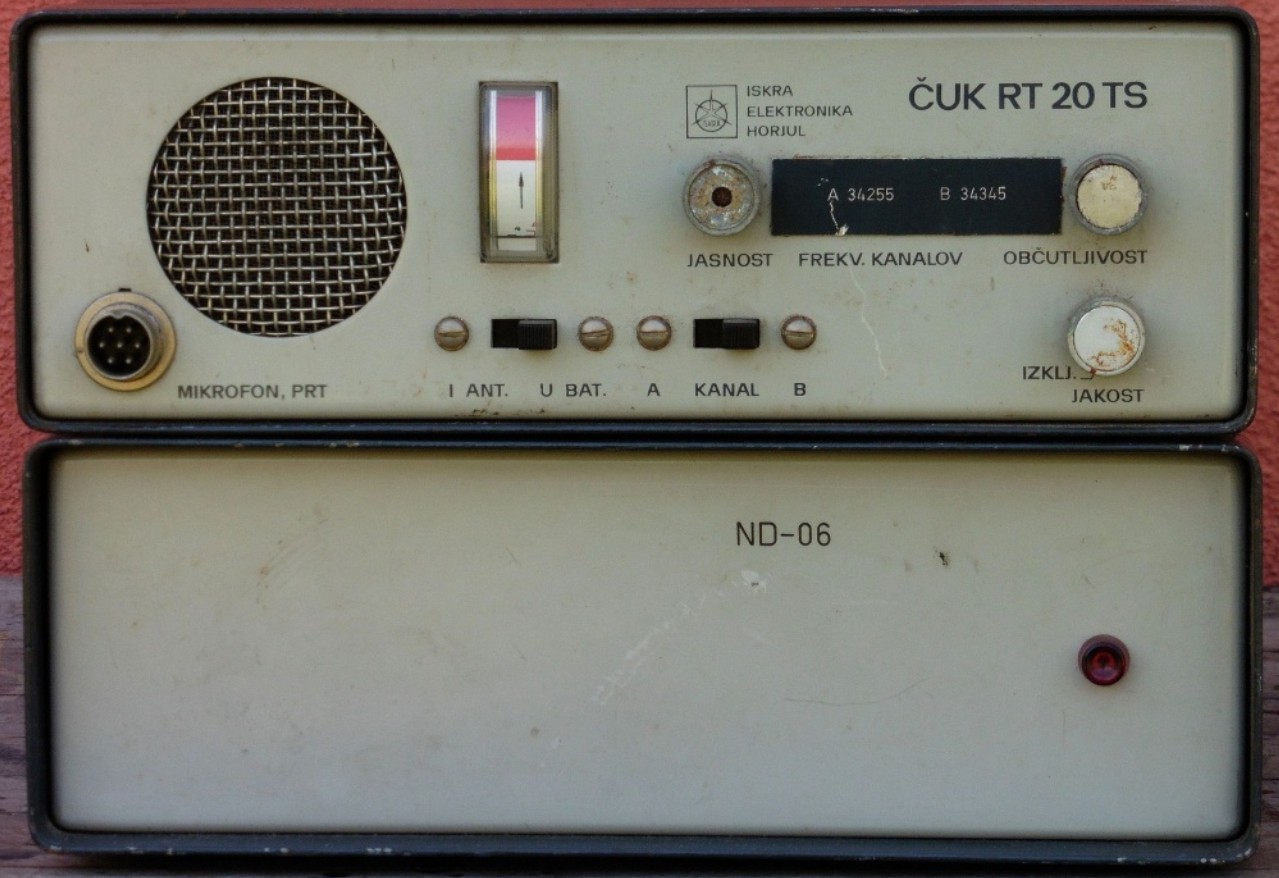
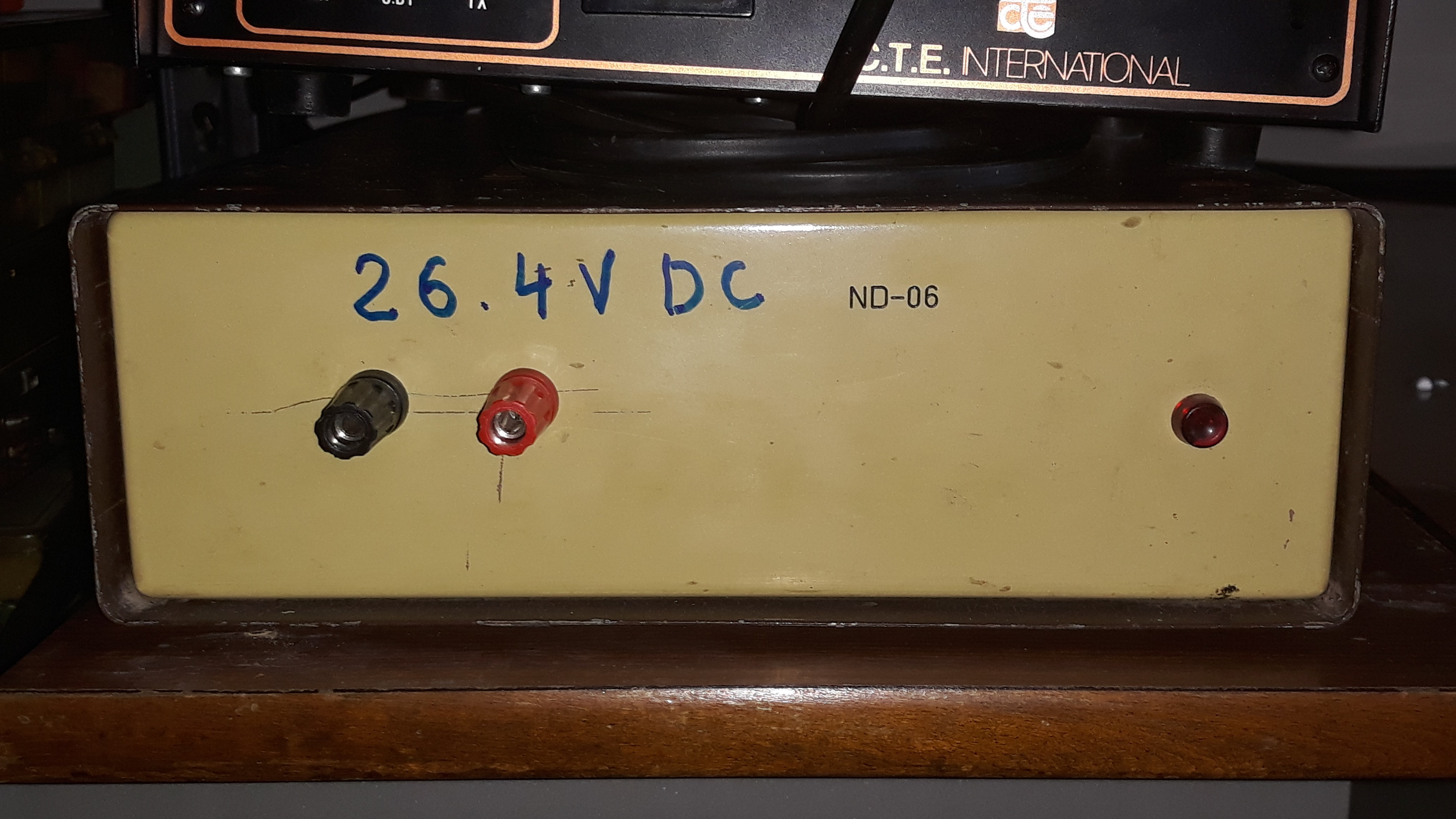
Owner Rudolf Bošnjak - E71RB, Sarajevo, Bosnia and Herzegovina...
BOSANSKI TEKST
Uprkos svojoj jednostavnosti, primopredajnik ČUK RT 20 TS je zanimljiv zbog
vrste amplitudne modulacije koju koristi, a to je SSB modulacija. Kod
amplitudne modulacije (AM), kao produkt modulacije prenose se noseći talas
(noseća frekvencija) i dva bočna frekventna opsega, jedan iznad i jedan
ispod noseće frekvencije. Noseća frekvencija ne sadrži nikakve informacije,
već se koristi samo za dobijanje bočnih opsega. Bočni opseg, sadrži potpuno
iste informacije, samo zrcalno modulirane. S obzirom na to da su sve korisne
informacije (zvuk, govor koji prenosimo) već sadržane samo u jednom bočnom
opsegu, ideja je bila da se tokom prenosa potpuno potisnu noseći talas i
jedan bočni opseg. Na taj način, puna snaga predajnika će se potrošiti samo
na prenos jednog bočnog opsega, a osim toga, takav signal će zauzimati samo
polovinu širine frekventnog opsega koji AM modulacija normalno zauzima. Ova
vrsta modulacije se koristi od kraja 1920-ih i naziva se SSBSC (Single Side
Band Suppressed Carrier) ili skraćeno SSB. SSB modulacija kod koje se
potiskuje donji bočni pojas, a emituje se samo gornji bočni pojas naziva se
USB (Upper Side Band), a ako se potiskuje gornji bočni pojas, a emituje se
samo donji bočni pojas, onda se radi o LSB modulaciji (Lower Side Band).
Obzirom na navedeno, u SSB predajniku, noseći talas i jedan bočni pojas
moraju biti na neki način potisnuti. Za potiskivanje nosećeg talasa koriste
se tzv. balansni modulatori ili DSB generatori. Postoji nekoliko vrsta
balansnih modulatora, a u primopredajniku ČUK RT 20 TS koristi se kružni
(prstenasti) modulator sa četiri kristalne diode. Ove diode se napajaju NF
signalom iz mikrofonskog pojačala (ograničenog na maksimalni raspon od
300-3000 Hz kako se ne bi stvorili preširoki bočni pojasevi) i HF signalom
iz osnovnog oscilatora frekvencije 8,9985 MHz. Na izlazu takvog modulatora
dobijaju se dva bočna pojasa bez nosećeg talasa (DSB), pa je sada potrebno
ukloniti jedan bočni pojas da bi se dobio čisti SSB signal. U našem
primjeru, to je urađeno pomoću kristalnog filtera i selektivnih MF pojačala
na 9 MHz. Primjećujemo da oscilator od 8,9985 MHz ima nižu frekvenciju od
filtera od 9 MHz, te će stoga kroz filter proći samo gornji USB bočni pojas
(bliži frekvenciji od 9 MHz). Ako bi oscilator radio na 1,5 kHz višoj
frekvenciji od frekvencije filtera, tj. na 9,0015 MHz, tada bi kroz filter
prošao samo donji LSB bočnog pojasa.
Sada je potrebno SSB signal na 9 MHz podići na željene radne frekvencije
predajnika (u našem slučaju 34,255 i 34,345 MHz), a to je moguće samo
miješanjem sa frekvencijom kanalskih oscilatora koji rade na 9 MHz na
frekvencijama nižim od željene radne frekvencije (25,255 i 25,345 MHz). Tako
dobijeni signal se pojačava u linearnim pojačalima (u našem slučaju u klasi
AB) kako bi se izbjeglo amplitudno izobličenje signala i time nerazumljivost
govornih informacija sadržanih u njemu. ČUK RT 20 TS ima dvije spojne
zavojnice na izlaznoj antenskoj liniji, od kojih jedna uzima signal za
indikaciju jačine struje antene, a druga signal za ograničavanje izlazne
snage predajnika (ALC – Automatic Level Control) gdje će se snaga predajnika
smanjiti ako struja antene iz bilo kojeg razloga premaši deklariranu
vrijednost (npr. u slučaju neprilagođenosti izlaznog pojačala anteni ili u
slučaju prejake modulacije-pobude pojačala).
Da bi se omogućio prijem SSB signala u SSB prijemniku ČUK RT 20 TS, radna
frekvencija se miješa sa kanalnim oscilatorom kako bi se dobio MF od 9 MHz,
koji se filtrira kristalnim filterom i pojačava MF pojačalom, a zatim se
potisnuti noseći talas ponovo zamjenjuje korištenjem osnovnog oscilatora od
8,9985 MHz. Miješanjem ove dvije frekvencije (9 MHz i 8,9985 MHz) u
detektoru produkta, dobijamo njihovu razliku, niske govorne frekvencije, što
predstavlja konačnu demodulaciju SSB signala. Naš SSB prijemnik (kao i
gotovo svaki drugi radio prijemnik) sadrži i kolo za automatsku kontrolu
pojačanja (AGC) koje kompenzuje promjene u jačini primljenog signala, što bi
se odrazilo na promjene u jačini demoduliranog zvuka. Na ovo kolo je
priključen potenciometar OSJETLJIVOST, kojim se može ručno podesiti
osjetljivost prijemnika.
-----------------------------------
ENGLISH TEXT
Despite its simplicity, the ČUK RT 20 TS transceiver is interesting because of the type of amplitude modulation it uses, which is SSB modulation. In amplitude modulation (AM), a carrier wave (carrier frequency) and two side frequency bands are transmitted as a product of the modulation, one above and one below the carrier frequency. The carrier frequency does not contain any information, but is only used to obtain the side bands. The side bands, in turn, contain exactly the same information, only mirror-modulated. Given that all useful information (sound, speech that we transmit) is already contained in only one side band, the idea was to completely suppress the carrier wave and one side band during transmission. In this way, the full power of the transmitter will be spent only on transmitting one side band, and in addition, such a signal will occupy only half the width of the frequency range that AM modulation normally occupies. This type of modulation has been used since the end of the 1920s and is called SSBSC (Single Side Band Suppressed Carrier) or SSB for short. SSB modulation in which the lower sideband is suppressed and only the upper sideband is emitted is called USB (Upper Side Band), and if the upper sideband is suppressed and only the lower sideband is emitted, then it is LSB modulation (Lower Side Band).
Given the above, in an SSB transmitter, the carrier wave and one sideband must be suppressed in some way. To suppress the carrier wave, so-called balance modulators or DSB generators are used. There are several types of balance modulators, and in our ČUK RT 20 TS transceiver, a circular (ring) modulator with four crystal diodes is used. These diodes are fed with the NF signal from the microphone amplifier (limited to a maximum range of 300-3000 Hz so as not to create too wide sidebands) and the HF signal from the basic oscillator with a frequency of 8.9985 MHz. At the output of such a modulator, two sidebands without a carrier wave (DSB) are obtained, so now it is necessary to remove one sideband to obtain a pure SSB signal. In our example, this is done using a crystal filter and selective MF amplifiers at 9 MHz. We notice that the 8.9985 MHz oscillator has a lower frequency than the 9 MHz filter, and therefore only the upper USB sideband (closer to the 9 MHz frequency) will pass through the filter. If the oscillator operated at 1.5 kHz higher frequency than the filter frequency, i.e. at 9.0015 MHz, then only the lower sideband LSB would pass through the filter.
Now the SSB signal at 9 MHz needs to be raised to the desired operating frequencies of the transmitter (in our case 34.255 and 34.345 MHz), and this is possible only by mixing with the frequency of channel oscillators operating at 9 MHz at frequencies lower than the desired operating frequency (25.255 and 25.345 MHz). The signal thus obtained is amplified in linear amplifiers (in our case in class AB) in order to avoid amplitude distortion of the signal and thus incomprehensibility of the speech information contained in it. ČUK RT 20 TS has two coupling coils on the output antenna line, one of which takes a signal for indicating the strength of the antenna current, and the other a signal for limiting the output power of the transmitter (ALC – Automatic Level Control) where the transmitter power will be reduced if the antenna current for any reason exceeds the declared value (e.g. in the case of non-adaptation of the output amplifier to the antenna or in the case of too strong modulation-excitation of the amplifier).
In order to make SSB signal reception possible in the SSB receiver ČUK RT 20 TS, the operating frequency is mixed with the channel oscillator to obtain a 9 MHz MF, which is filtered with a crystal filter and amplified with an MF amplifier, and then the suppressed carrier wave is replaced again using the basic oscillator of 8.9985 MHz. By mixing these two frequencies (9 MHz and 8.9985 MHz) in the so-called product detector, we obtain their difference, i.e. low speech frequencies, which is the final demodulation of the SSB signal. Our SSB receiver (like almost every other radio receiver) also contains an automatic gain control (AGC) circuit that compensates for changes in the strength of the received signal, which would be reflected in changes in the strength of the demodulated sound. A SENSITIVITY potentiometer is connected to this circuit, which can be used to manually adjust the sensitivity of the receiver.
Click above photo to see a larger photo.