|
NABATAEAN MADAIN SALEH - 131 GENERATOR MACHINE...
CAVITY ROOMS AND HORIZONTAL tunnel to the resonant chamber.
Discovery by Rudolf Bosnjak
FOR SOUND WAVES or UNKNOWN WAVES RESONATOR CAVITY ROOMS
Prava kopiranja ©. 2015. Sva prava pridržana. Rudolf Bošnjak. Copyright ©. 2015 All rights reserved. Rudolf (Boschnjak) Bosnjak.
At its peak, the Nabataean kingdom stretched from its capital Petra in what is now Jordan deep into the Arabian Peninsula. It controlled vast arid and semi-arid expanses, and drew its wealth by trading incense, spices and aromatic plants. Madin Saleh reached its peak as the major staging post on the main north–south trade route.
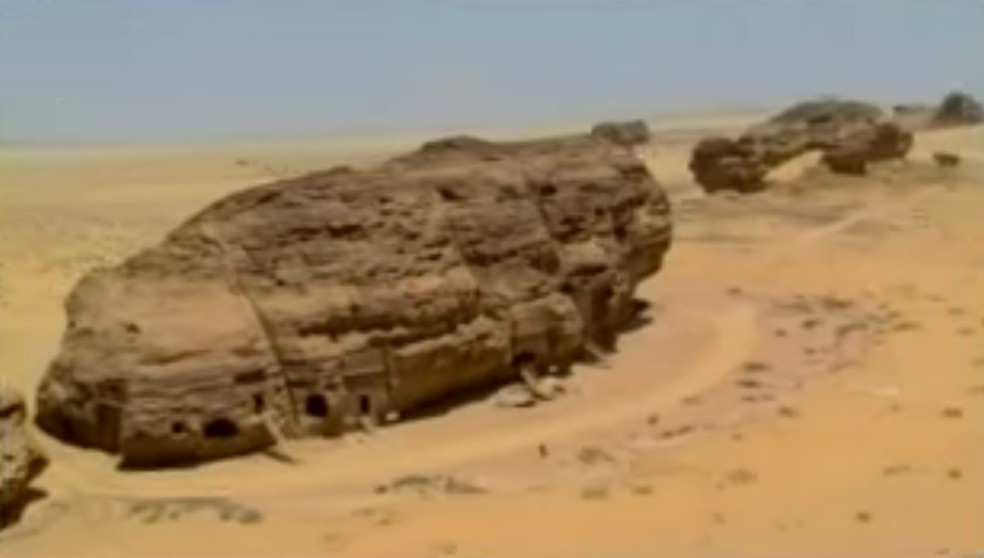
MADAIN SALEH GENERATOR AS METEOR SPACE SHIP SHAPE SPHERE ON MARS SURFACE...
Madain Saleh is a pre-Islamic archaeological site located in the Al-Ula sector, within the Al Madinah Region of Saudi Arabia, approximately 400km north-west of Madinah. Formerly known as Hegra it is the largest conserved site of the civilization of the Nabataeans south of Petra in Jordan.

MAGNETIC FIELD LINES CONFIGURATION IN MADAIN SALEH
HERE I RUDOLF BOSNJAK SHOW HIDDEN SECRET I DISCOVER WHAT IT IS.
THIS SHAPE IS EVERY WHERE CARVED ON ANCIENT SITES, CHURCHES, MOSQUE, BUT NOBODY UNDERSTAND WHAT IT IS, I COMPREHEND AND UNDERSTAND WHAT IT IS AFTER MANY YEARS OF SEARCH AND RESEARCH WHAT IT IS, THANK TO DRAWING I SEE ON ALEKSANDAR KUSHELEV SOFTWARE DESIGN FOR 4 GHz ELECTROMAGNETIC GENERATOR, BUT THIS GENERATOR IS HUGE.


Hidden truth is revealed here by Rudolf Bosnjak.
Here can be seen the SQUARE or triangular
window above the entrance to the receiver. Such windows are usually made in the form of
arches with the keystone at a top, but there is no keystone there. This greatly weakened
structural strength of the window.
Note that size of the window is bigger than height of a man. It is cannot be said that
builders did not know about keystones, because they constructed the dome perfectly. So,
they built this window without keystone deliberately.
Elongated triangle above the entrance is used to extend the bandwidth of the antenna
(broadband tuning-fork).
This suggests that the receiver is designed to receive
modulated signal that is a set of 3 or 5 or 7 tone frequencies.
RIGHT IS RESONATOR DRAWING FOR 4GHz FREQUENCY DESIGN BY ALEKSANDAR KUSHELEV.
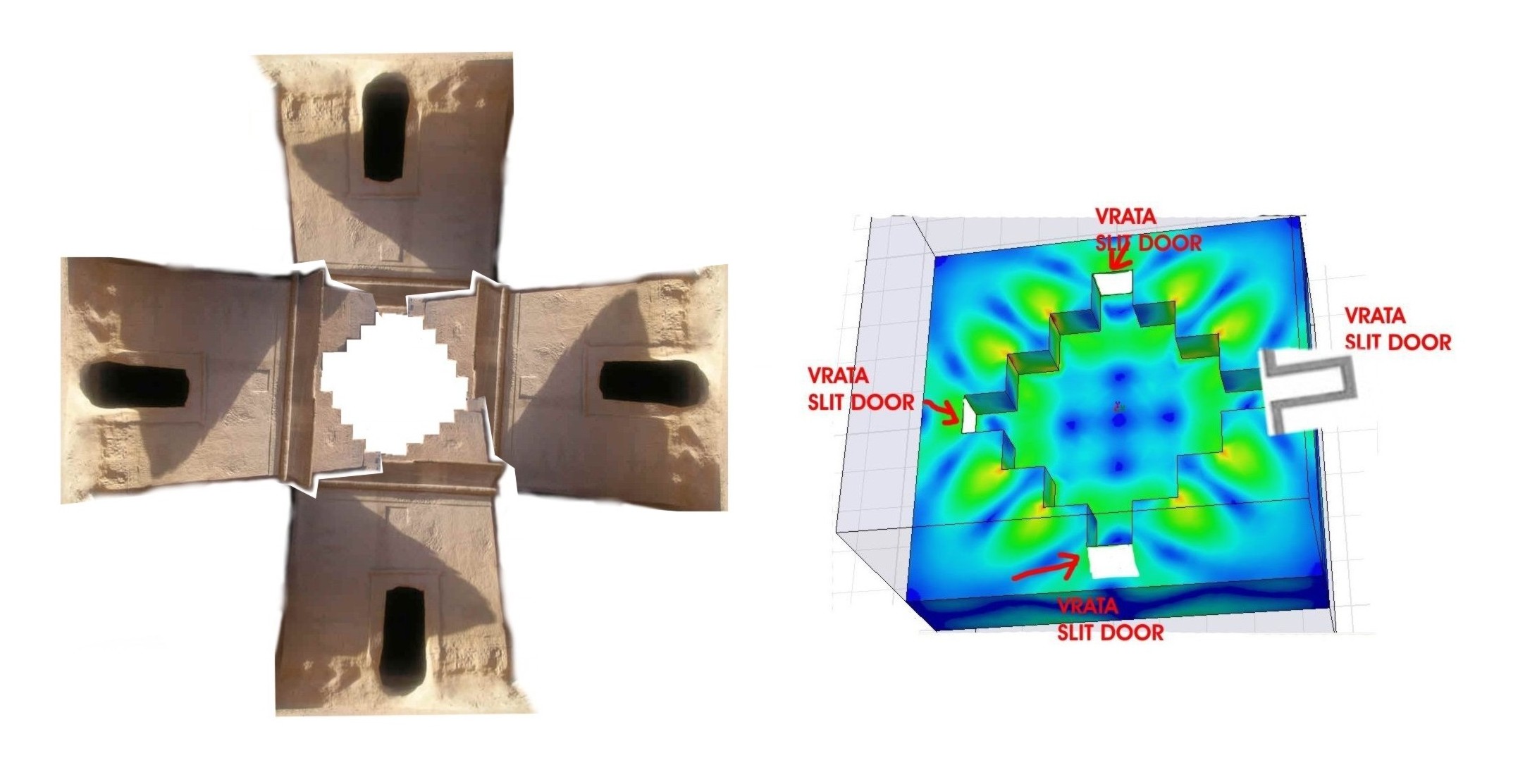
Hidden truth is revealed here by Rudolf Bosnjak.

Hidden truth is revealed here by Rudolf Bosnjak.
Scheme of profile of the antenna for modulated signals.
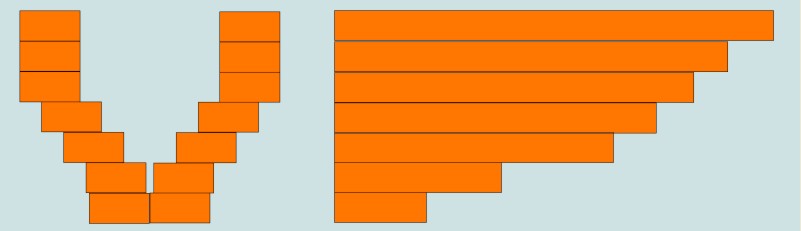
Here can be seen the triangular window
above the entrance to the receiver. Such windows are usually made in the form of arches
with the keystone at a top, but there is no keystone there. This greatly weakened
structural strength of the window.
Note that size of the window is bigger than height of a man. It is cannot be said that
builders did not know about keystones, because they constructed the dome perfectly. So,
they built this window without keystone deliberately.
Elongated triangle above the entrance is used to extend the bandwidth of the antenna
(broadband tuning-fork).
This suggests that the receiver is designed to receive modulated signal that is a set of 3 or 5 or 7 tone frequencies what I call 3STEPS, 5 STEPS or 7steps.
We know for Dual Tone Multy Frequency as DTMF and THIS IS
Trial Tone Multy Frequency as TTMF and
Fifth Tone Multy Frequency as FTMF
Seventh Tone Multy Frequency as STMF
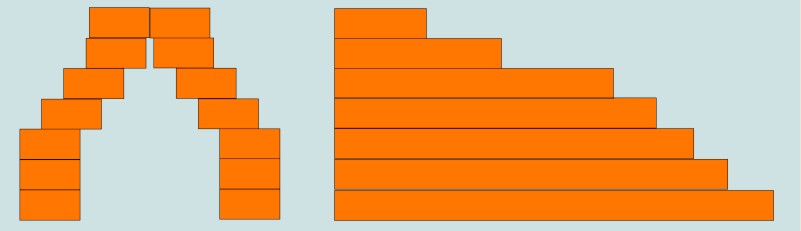
Each subsequent layer vibrators is made shorter than lower.
As a result, the layers of stone antenna resemble a stack of tuning forks stacked one onto another.
Lowest tuning fork in such stack has the lowest frequency of the excitation, the topmost - highest.

MADAIN SALEH GENERATOR MACHINE... IS VISIBLE THAT BOTTOM PART OF THIS GENERATOR WAS IN THE WATER IN ANCIENT PAST...
HERE IS EXPLANATION WHAT MISSING OR IS INVISIBLE FOR HUMAN EYES
WE HUMANS CAN SEE ONLY 1/4 OF COMPLETE GENERATOR.

LEFT IS: 5 STEP SYSTEM EXTENDED TO 10 STEP SYSTEM
Qasr al Farid biggest generator tomb in Archeological site Madain Saleh
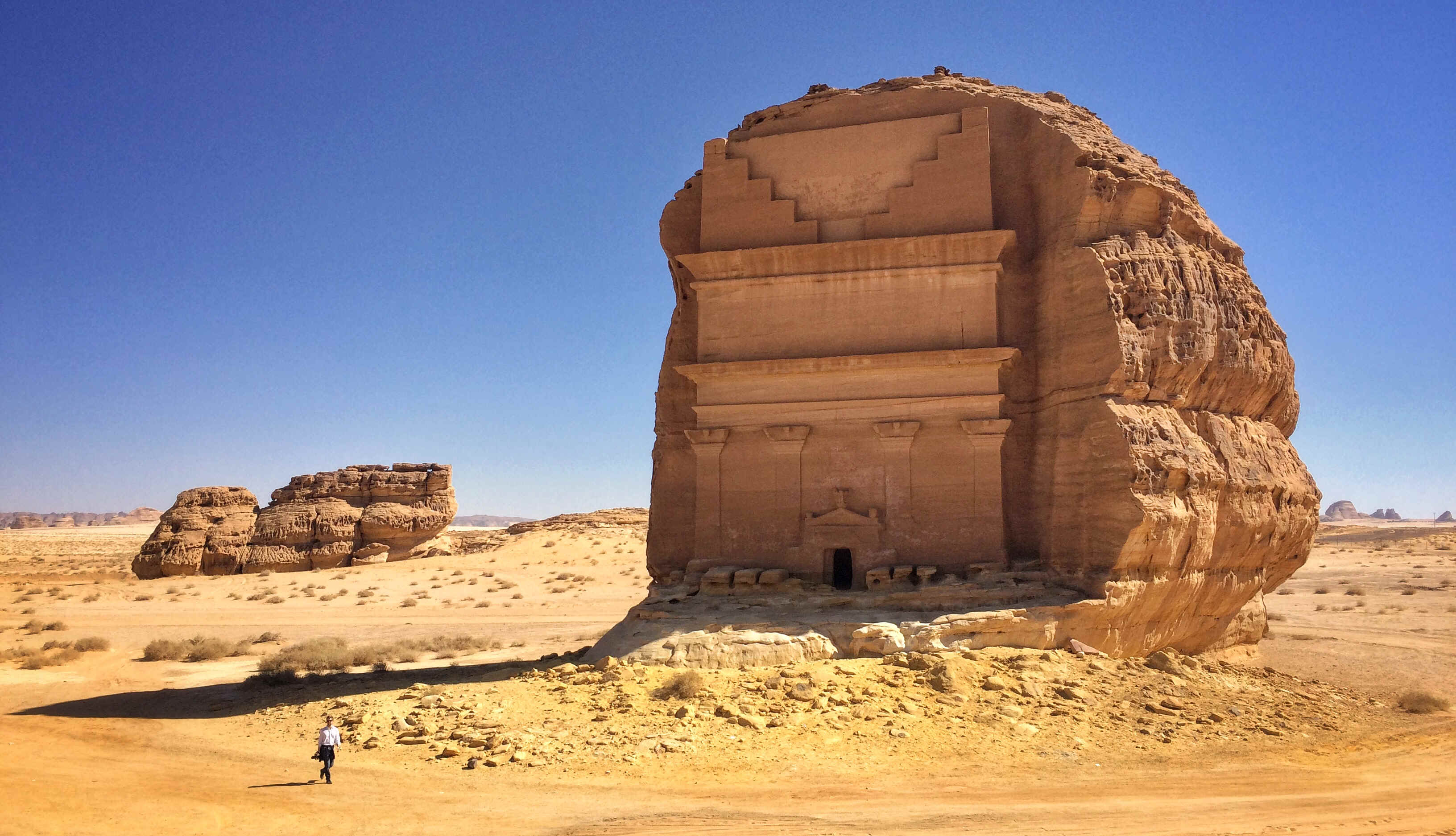
MADAIN SALEH GENERATOR MACHINE... IS VISIBLE THAT BOTTOM PART OF THIS GENERATOR WAS IN THE WATER IN ANCIENT PAST...
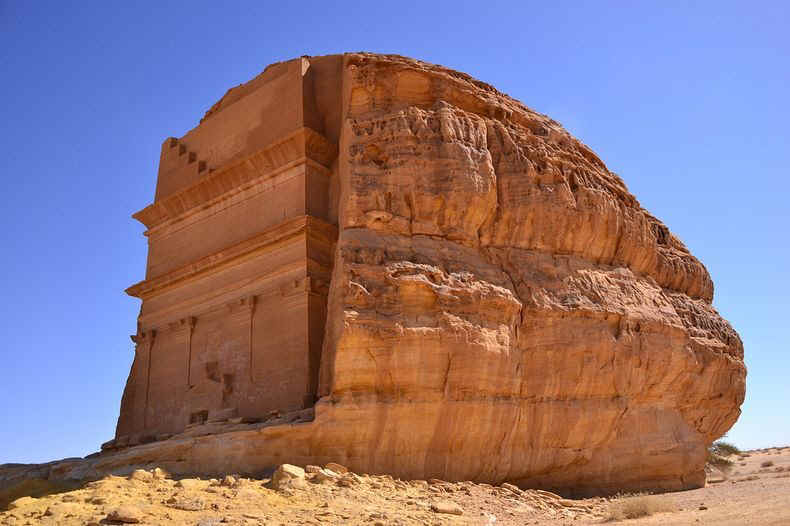
MADAIN SALEH GENERATOR MACHINE... IS VISIBLE THAT BOTTOM PART OF THIS GENERATOR WAS IN THE WATER IN ANCIENT PAST...
The site features 131 massive rock cut tombs with decorated facades, many with inscribed Nabatean epigraphs, spread out over 13.4 km and dating from the 1st century BC to the 1st century AD.
WHAT IS CONNECTION BETWEEN SEA SALT WATER OR LAKE FRESH WATER IN TIME WHEN 131 OF THIS GENERATOR WAS BUILD IN THE ANCIENT PAST...
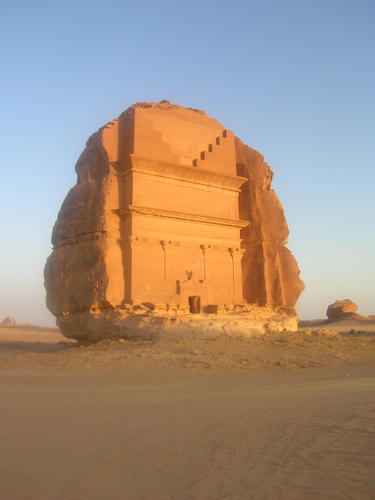

MADAIN SALEH GENERATOR MACHINE... IS VISIBLE THAT BOTTOM PART OF THIS GENERATOR WAS IN THE WATER IN ANCIENT PAST...

MADAIN SALEH GENERATOR MACHINE... IS VISIBLE THAT BOTTOM PART OF THIS GENERATOR WAS IN THE WATER IN ANCIENT PAST...
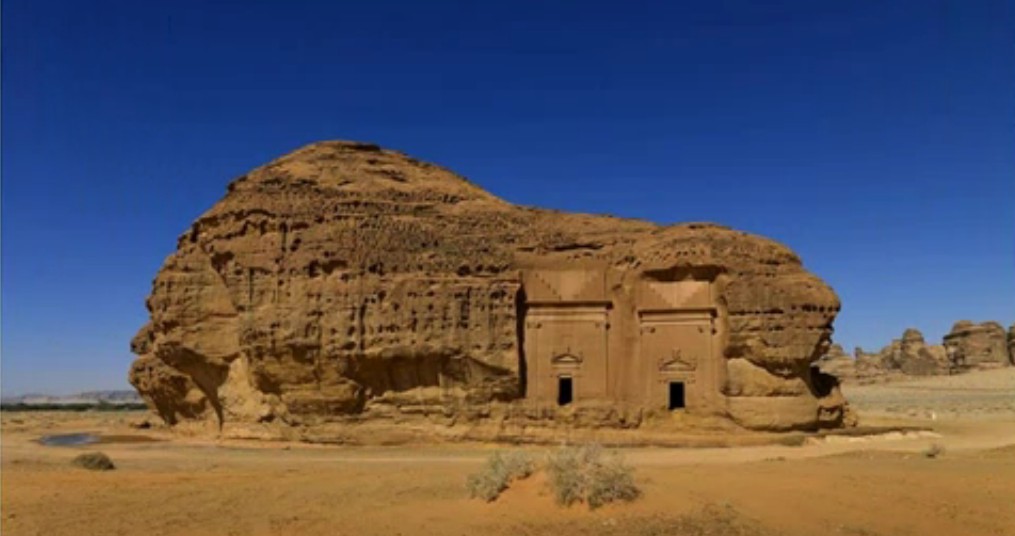
MADAIN SALEH GENERATOR MACHINE... IS VISIBLE THAT BOTTOM PART OF THIS GENERATOR WAS IN THE WATER IN ANCIENT PAST...
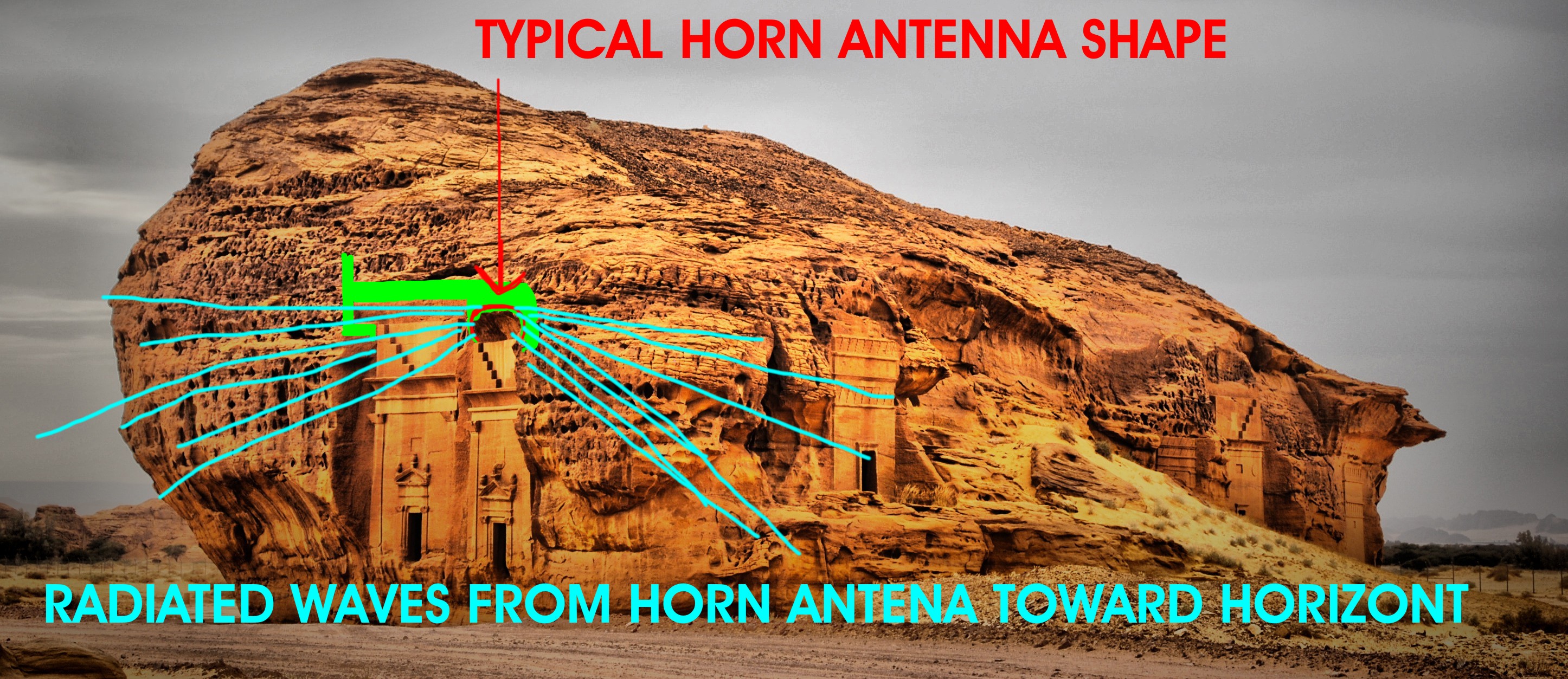
WATCH CAREFULLY IN THIS IMAGE I SEE CLASSICAL REFLECTOR FROM HORN ANTENNA
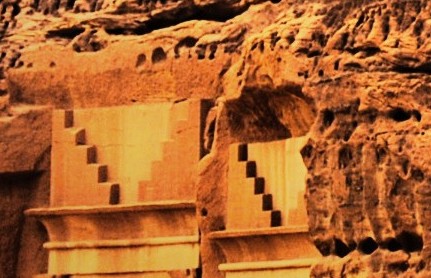
WATCH CAREFULLY IN THIS IMAGE I SEE CLASSICAL REFLECTOR FROM HORN ANTENNA IN GREEN PART
RESONATOR DRAWING FOR 4GHz FREQUENCY DESIGN BY ALEKSANDAR KUSHELEV,
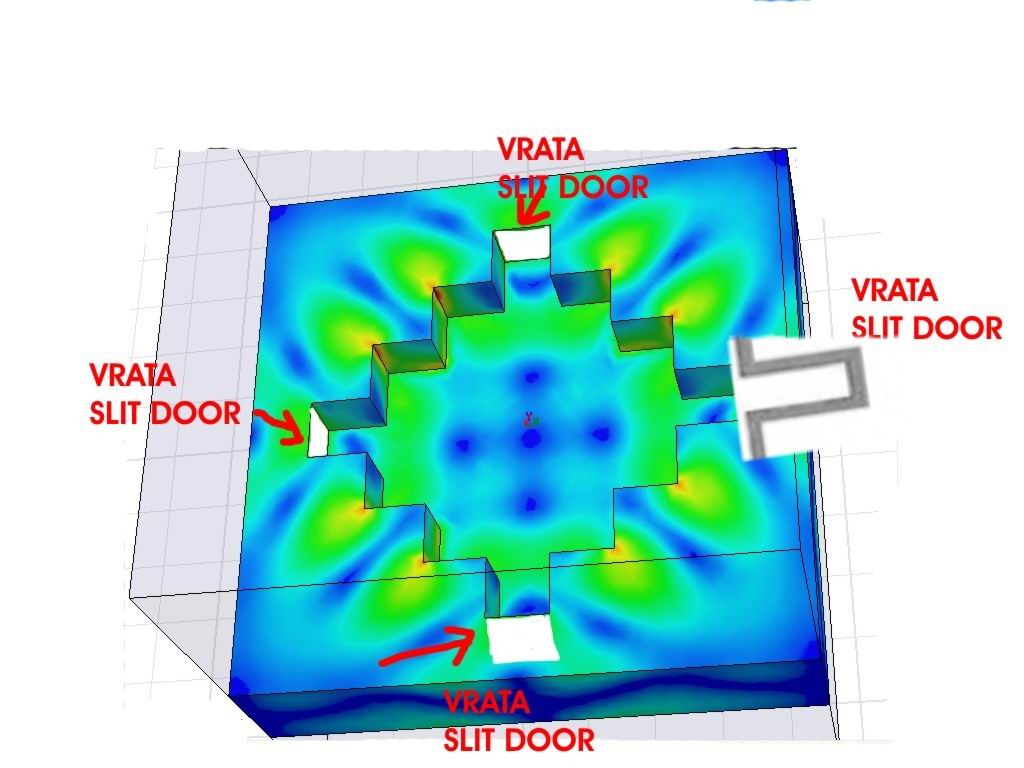
RESONATOR DRAWING FOR 4GHz FREQUENCY DESIGN BY ALEKSANDAR KUSHELEV.
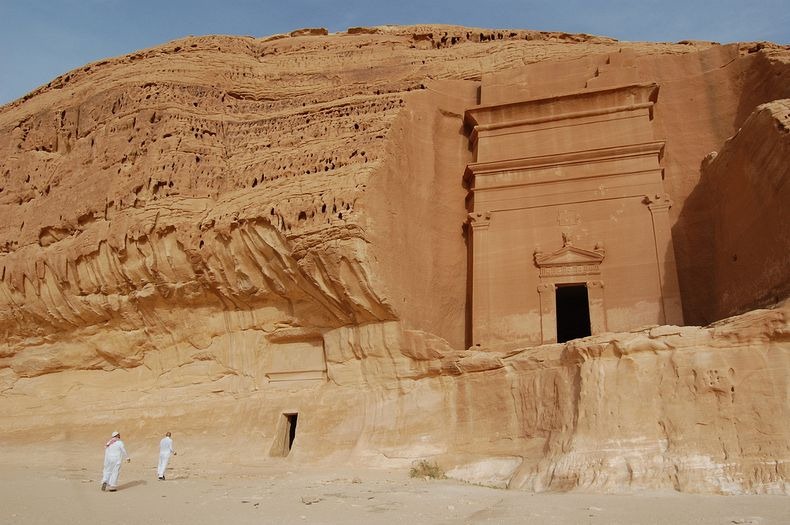
MADAIN SALEH GENERATOR MACHINE... IS VISIBLE THAT BOTTOM PART OF THIS GENERATOR WAS IN THE WATER IN ANCIENT PAST...
The Archaeological Site of Al-Hijr (Madâin Sâlih) is the first World Heritage property to be inscribed in Saudi Arabia. Formerly known as Hegra it is the largest conserved site of the civilization of the Nabataeans south of Petra in Jordan. It features well-preserved monumental tombs with decorated facades dating from the 1st century BC to the 1st century AD. The site also features some 50 inscriptions of the pre-Nabataean period and some cave drawings. Al-Hijr bears a unique testimony to Nabataean civilization. With its 111 monumental tombs, 94 of which are decorated, and water wells, the site is an outstanding example of the Nabataeans’ architectural accomplishment and hydraulic expertise.
WATCH CAREFULLY IN THIS IMAGE I SEE CLASSICAL REFLECTOR FROM HORN ANTENNA ON THE RIGHT
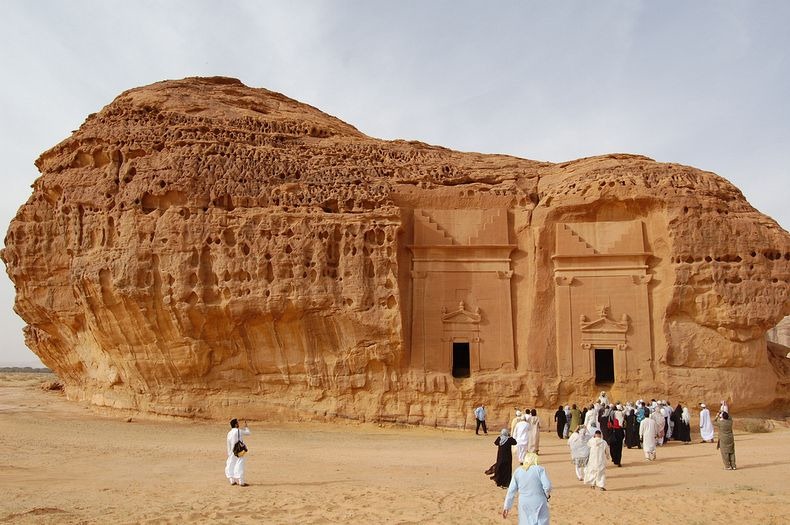
MADAIN SALEH GENERATOR MACHINE... IS VISIBLE THAT BOTTOM PART OF THIS GENERATOR WAS IN THE WATER IN ANCIENT PAST...
The archaeological site of Al-Hijr is a major site of the Nabataean civilisation, in the south of its zone of influence. Its integrity is remarkable and it is well conserved. It includes a major ensemble of tombs and monuments, whose architecture and decorations are directly cut into the sandstone.
It bears witness to the encounter between a variety of decorative and architectural influences (Assyrian, Egyptian, Phoenician, Hellenistic), and the epigraphic presence of several ancient languages (Lihyanite, Thamudic, Nabataean, Greek, Latin).
It bears witness to the development of Nabataean agricultural techniques using a large number of artificial wells in rocky ground. The wells are still in use.
The ancient city of Hegra/Al-Hijr bears witness to the international caravan trade during late Antiquity.

WATCH CAREFULLY IN THIS IMAGE I SEE CLASSICAL REFLECTOR FROM HORN ANTENNA ON THE RIGHT
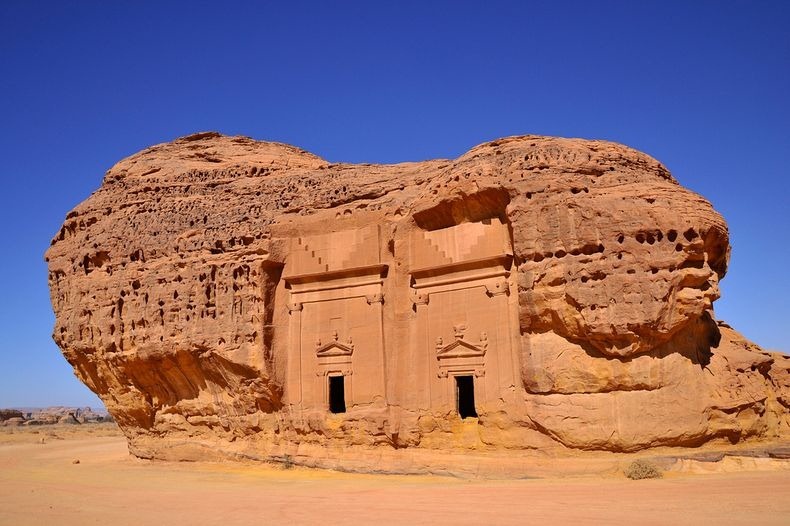
MADAIN SALEH GENERATOR MACHINE... IS VISIBLE THAT BOTTOM PART OF THIS GENERATOR WAS IN THE WATER IN ANCIENT PAST...
WATCH CAREFULLY IN THIS IMAGE I SEE CLASSICAL REFLECTOR FROM HORN ANTENNA
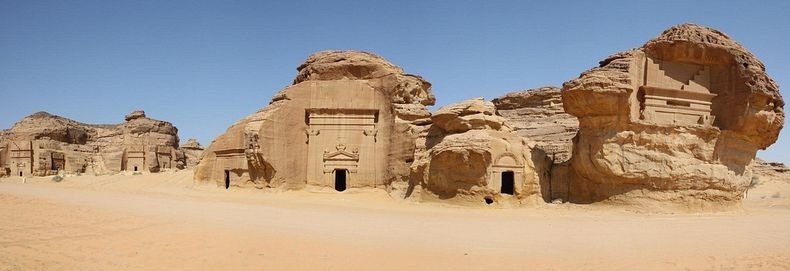
MADAIN SALEH GENERATOR MACHINE... IS VISIBLE THAT BOTTOM PART OF THIS GENERATOR WAS IN THE WATER IN ANCIENT PAST...
Most of the monuments and inscriptions of the archaeological site of Al-Hijr date from the 1st century BCE and the 1st century CE. But the inscriptions in Lihyanite script and some recently discovered archaeological vestiges are evidence for human settlement as early as the 3rd or 2nd century BCE.
One-third of the tombs, which are amongst the largest, are clearly dated to between 0-75 CE.
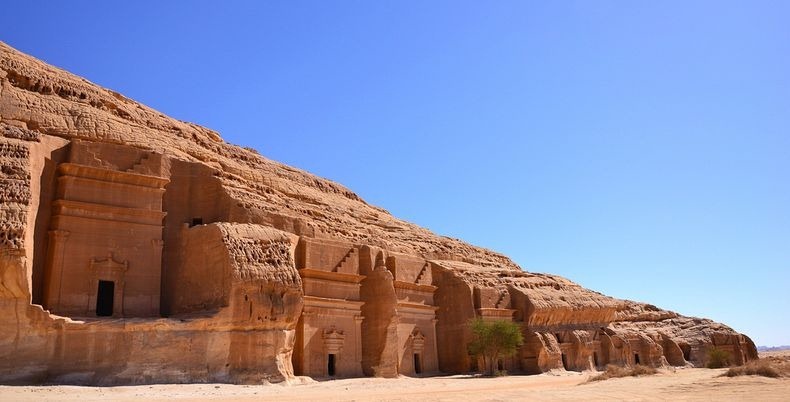
At its apogee and for around two centuries, the Nabataean kingdom extended over southern Syria, the Negev and Hedjaz. To the west it came up against the ambitions of the Roman world, and it remained essentially a continental power. It controlled vast arid and semi-arid expanses, and drew its wealth from the development of oasis agriculture and the caravan trade.
The Nabataeans are well known for their role in the commerce of incense, spices and aromatic plants during late Antiquity and the pre-Islamic period. They then controlled the land routes between the Indian Ocean and the Red Sea and Mediterranean. Land routes were important as navigation remained difficult, particularly in the Red Sea.


Hegra was a major staging post on the main north-south caravan route. A secondary route linked it to the port of Egra Kome, according to a Greek-language source. Two recently discovered Nabataean sites on the shores of the Red Sea could in fact be this port.
The Hedjaz region was integrated into the Roman province of Arabia in 106 CE. A monumental Roman epigraph of 175-177 CE was recently discovered at Al- Hijr. The region then formed part of Roman history, and then Byzantine history, until the 7th century. In 356, the city of Hegra is again mentioned, as being led by a mayor of local origin, but it seems to have been very modest in size at that time.
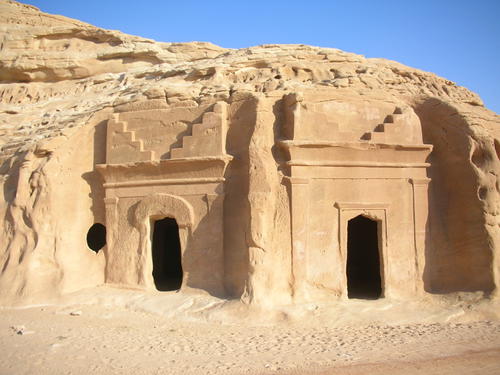
The Arab traveller Al-Maqdasi indicated, in the 10th century CE, that Al-Hijr was a small oasis whose activities centred on its wells and on its many peasants. However, there is no other testimony to lasting settlement of the site between the 4th and the 19th century CE. It may be that it was only sporadically and infrequently occupied over this long period, a hypothesis that is strengthened by the lack of damage to the tombs right up to the recent past. Seasonal use was probably made of Al- Hjir by shepherds, traders or pilgrims, but this did not lead to the transformation of the tombs into shelters as was the case at Petra.
In the 14th century, the celebrated traveller Ibn Battuta admiringly described the Nabataean tombs of Al-Hijr, cut into the red stone. He did not mention any human activity at the time.
In 1876-1877, Charles Doughty wrote in his book Travels in Arabia Deserta, that peasants from Tayma had put back into use the wells and the ancient agricultural lands of the oasis. Traces of plantation and reuse of the wells have also been found for the 20th century.
It was at the start of the 20th century that changes of some significance appeared, with the construction of the railway and railway station. Some archaeological elements were damaged and the exploitation of the quarries changed the shape of some sandstone outcrops, particularly at Jabal al-Mahjar in the north of the site, and at Qasr al-Sani in the south.
HOW TO COMPREHEND AND UNDERSTAND THIS IMAGEE
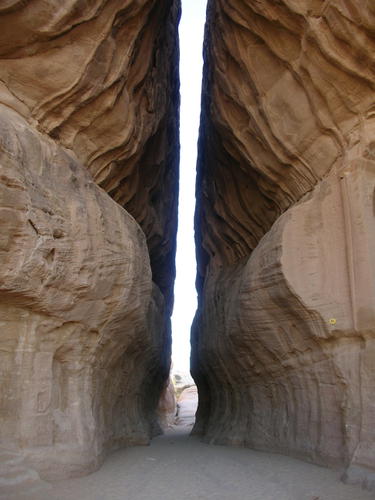
THIS IS HORIZONTAL tunnel to the resonant chamber.
HERE IS ONE SLIT...AND HERE IS MY EXPLANATION
FIRST MUST ROTATE 180 DEGREES THEN APPEAR INVISIBLE...

THIS IS HORIZONTAL tunnel to the resonant chamber.
THEN YOU SEE INVISIBLE TO HUMAN EYES, IT IS SPACE AND TIME IN MATTER OF AIR MOLECULES, AND IN BOSNIA THIS IS VISIBLE AS SPACE AND TIME IN MATTER OF STONE ROCK,

AND IS VISIBLE AS (NISHAN) TOMBSTONE FOR DEAD MUSLIM PEOPLE.
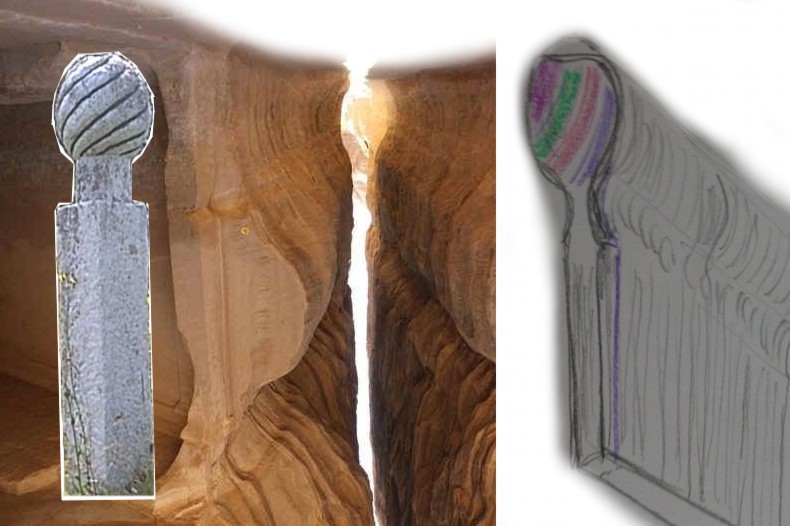
THIS IS HORIZONTAL tunnel to the resonant chamber.
HOW TO EXPLAIN SPACE AND TIME IN MATTER OF AIR MOLECULES...
HOW TO EXPLAIN SPACE AND TIME IN MATTER OF STONE ROCK...

NOW SPACE AND TIME IN MATTER EXIST BETWEEN AIR MOLECULES, ATOMS...
NOW SPACE AND TIME EXIST BETWEEN STONE ROCK MOLECULES, ATOMS...
SPACE AND TIME IN MATTER EXIST BETWEEN INVISIBLE AIR MOLECULES, ATOMS... BECAUSE THEY ARE INVISIBLE MATTER.
SPACE AND TIME EXIST BETWEEN VISIBLE STONE ROCK MOLECULES, ATOMS...BECAUSE THEY ARE VISIBLE MATTER.
Apart from the early descriptions from some European travellers in the late 19th century, such as Charles Doughty mentioned above, the first genuine study missions were carried out by the Dominican fathers A. Jaussen and R. Savignac, in 1907, 1909 and 1910. They then provided the first archaeological and epigraphic descriptions of the north-west of the Arabian Peninsula and Madain Salih in particular. Their Mission archéologique en Arabie is still a standard work on the subject. Several journeys were made by Westerners for archaeological and historic reasons between the First World War and the 1960s, providing descriptions of the site and its vestiges.
Since that period, excavation and preservation missions have been carried out under the supervision of the Department of Antiquities of Saudi Arabia.

At the end of the 1960s and at the start of the 1970s, a programme was carried out in the Madain Salih region to encourage the sedentarisation of the Bedouins. Under this scheme, ancient wells were reused with a modern pumping system that damaged their ancient infrastructures. At the outset, this programme involved the reuse of the zones cultivated in the 19th century. However, the official identification of the archaeological site of Madain Salih, in 1972, resulted in the displacement of the agricultural activities towards the north, outside the site. Moreover, technical changes tended towards a more intensive agriculture based on freshly-dug wells.
ONE SLIT VISIBLE...
WATCH CAREFULLY IN THIS IMAGE WHERE I SEE MISSING SHAPE ON CEILING ROOF AS TOP OF CLASSICAL RESONATOR CHAMBER

THIS IS HORIZONTAL tunnel to the resonant chamber.
MADAIN SALEH GENERATOR MACHINE... IS VISIBLE THAT BOTTOM PART OF THIS GENERATOR WAS IN THE WATER IN ANCIENT PAST...
ONE SLIT VISIBLE...
WATCH CAREFULLY IN THIS IMAGE I SEE MISSING SHAPE ON CEILING ROOF AS TOP OF CLASSICAL RESONATOR CHAMBER
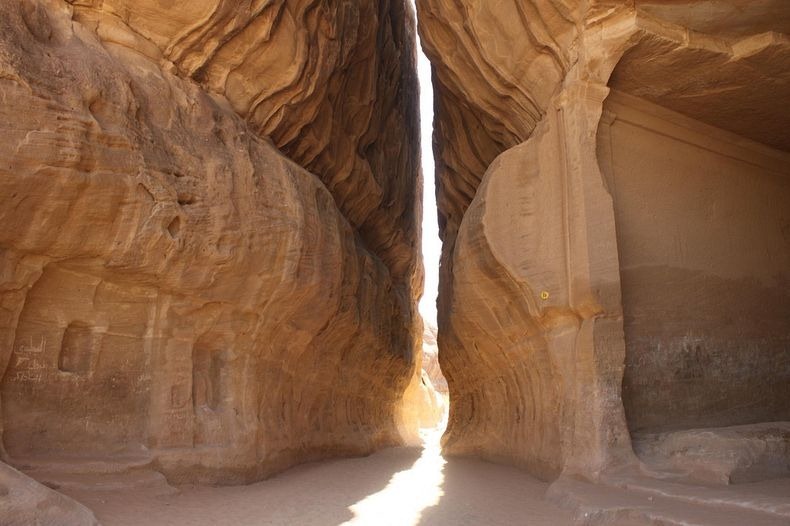
THIS IS HORIZONTAL tunnel to the resonant chamber.
MADAIN SALEH GENERATOR MACHINE... IS VISIBLE THAT BOTTOM PART OF THIS GENERATOR WAS IN THE WATER IN ANCIENT PAST...
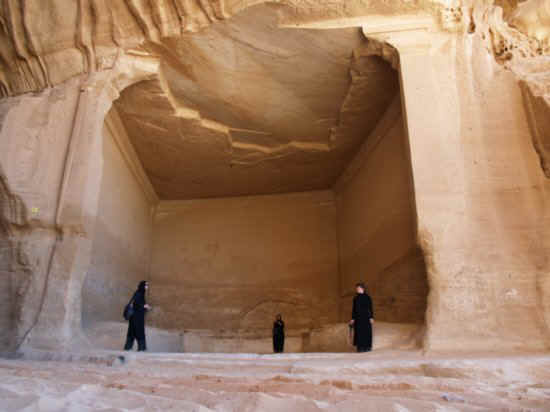
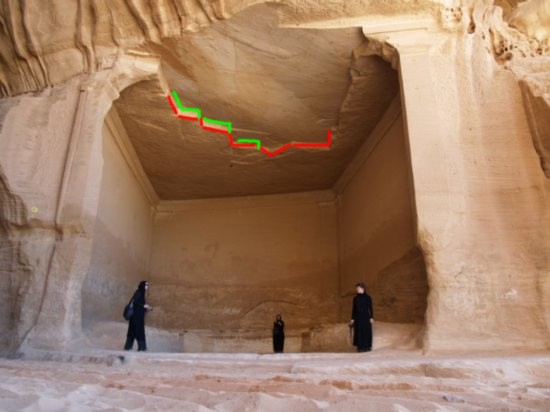
THIS IS resonant chamber.
SEE SPHERE SHAPE AS ON MASQUE OUTSIDE ON THE TOP OF CLASSICAL RESONATOR CHAMBER CEILING
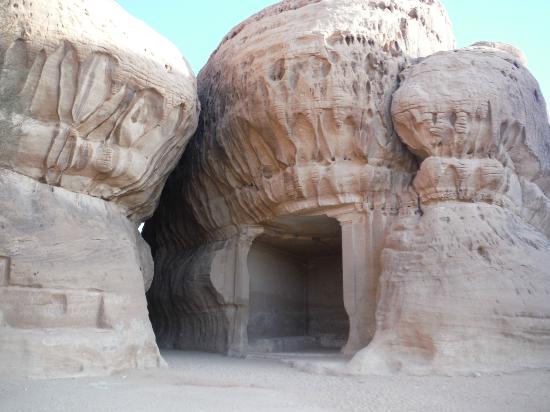
THIS IS resonant chamber.
SEE SPHERE SHAPE AS ON MASQUE OUTSIDE ON THE TOP OF CLASSICAL RESONATOR CHAMBER CEILING
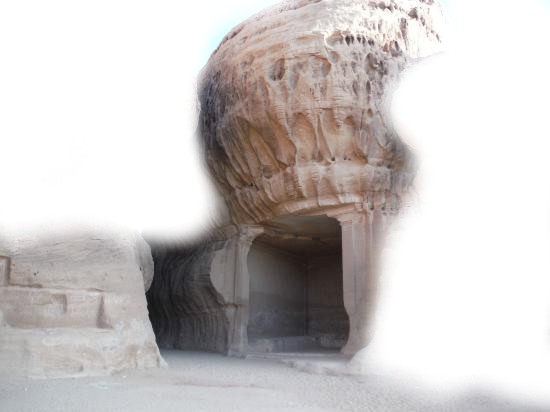
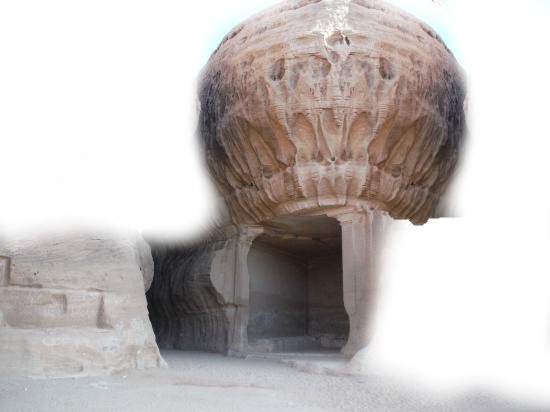
THIS IS resonant chamber.
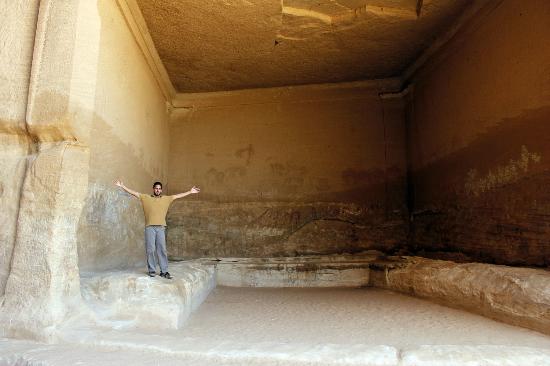
THIS IS resonant chamber.

THIS IS resonant chamber.
DOUBLE SLIT ...
The monumental tombs have not been subjected to subsequent reuse of material, or major pillage over the long course of history, and they have been preserved up to the contemporary period. In the 1980s, excavation campaigns led to cleaning operations inside the tombs and the removal of burial vestiges. Today it is very difficult to find any such vestiges in their original state at Al-Hijr.
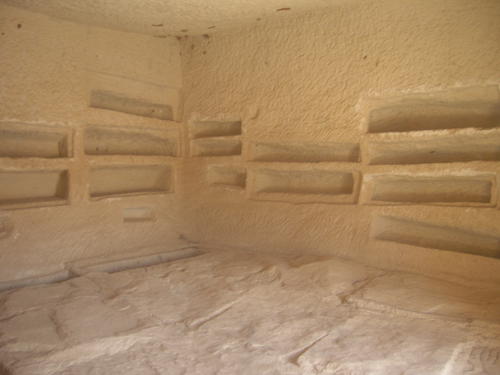

THIS IS resonant chamber.
MADAIN SALEH ONE ROOM GENERATOR INSIDE
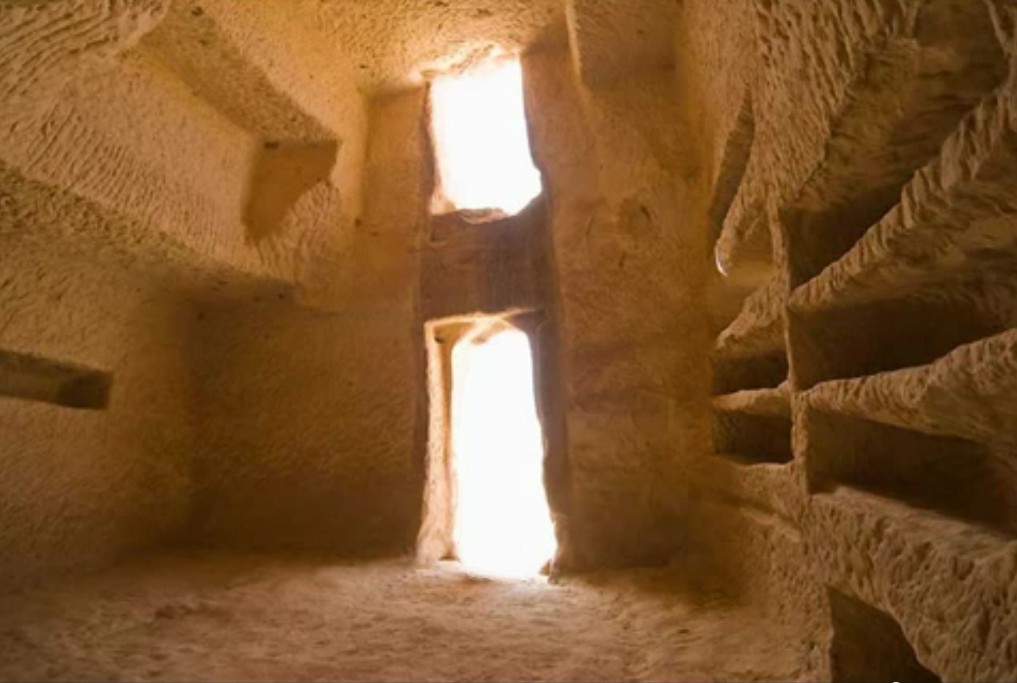
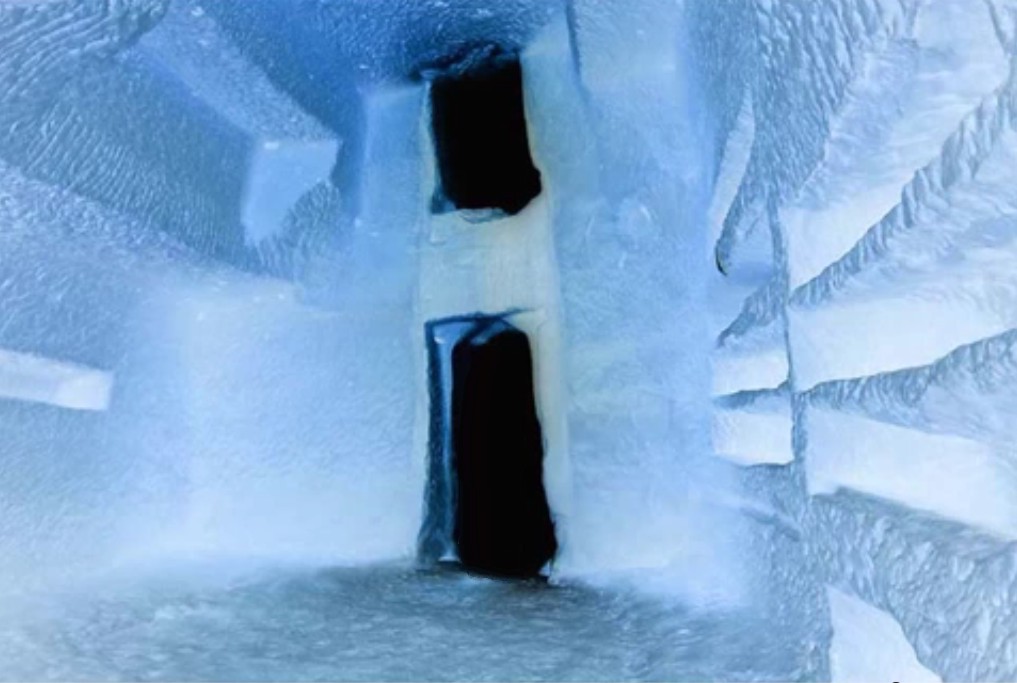
THIS IS resonant chamber.
LFT: POSITIVE IMAGE RIGHT: NEGATIVE IMAGE
Since 2001, a cooperation agreement has been in force between France (Ministry of Foreign Affairs, Centre national de la recherche scientifique-CNRS) and the Kingdom of Saudi Arabia (Ministry of Antiquities and Museums, King Saud University Riyadh) for the study of the Al-Hijr site. It favours non-destructive methods: aerial photography, geophysical analysis, architectural study, systematic inventory, etc. The agreement was renewed in 2006.


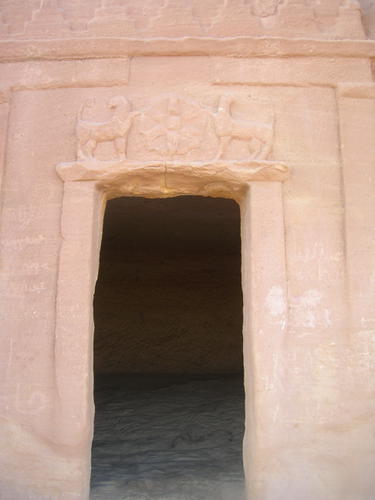
Regards Rudolf Bosnjak
If, you wish to contact me regarding my research work above, please use this web page www.bev.ba/ELEKTROAUTO/contact/contact.html
Ako, želiš da me kontaktiraš u vezi rada na mom istraživanju gore, molim koristi web stranicu www.bev.ba/ELEKTROAUTO/contact/kontakt.html
Prava kopiranja ©. 2015. Sva prava pridržana. Rudolf Bošnjak. Copyright ©. 2015 All rights reserved. Rudolf (Boschnjak) Bosnjak. |
www.bev.ba www.elektroauto.ba |
|