 |
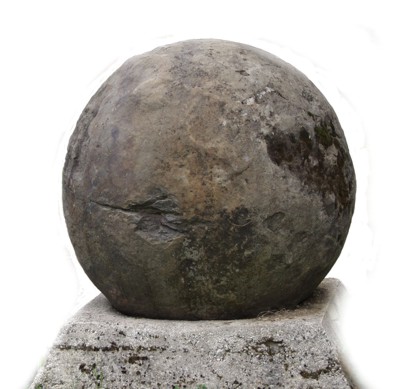 |
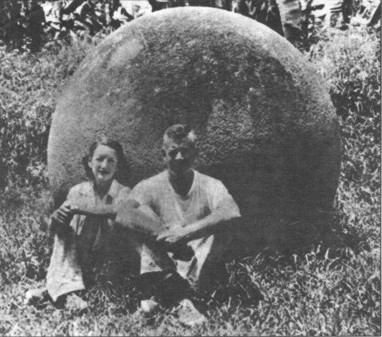
| Dr. Lothrop and his wife in front of ball from Costarica, sometime in 1940 year. | Similar stone ball is found in Vares,
Bosnia...what is connection... See here stone bals from Bosnia, Bosnia and Hezegovina |
Balkan Museum - Balkanski Muzej
I will
present historical artifact find by myself on different sources
in area of former prehistoric area of Illyricum
and present Balkan countries
PLASMA SPHERES IN COSTA RICA
Please wait for image download.
|
|
| Dr. Lothrop and his wife in front of ball from Costarica, sometime in 1940 year. | Similar stone ball is found in Vares,
Bosnia...what is connection... See here stone bals from Bosnia, Bosnia and Hezegovina |
Unknown rock material...in shape of BALL found in Costarica and Bosnia...
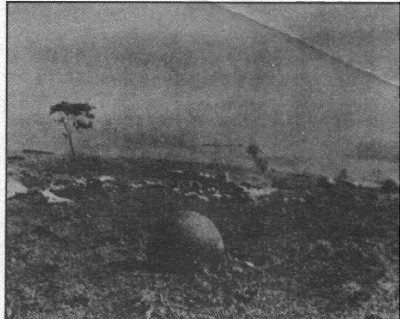
Image from 1940 year, done from Dr Samuel Lothrop.
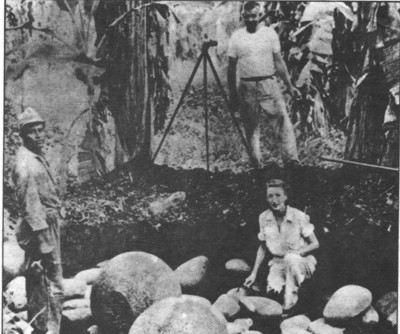
Dr. Lothrop and his team in excavation in Costarica of rock-stone in shape of BALL.
Samo neki dijelovi teksta preneseni su iz knjige: Misterije svijeta, pisac je Artur Clark, strana 55.
Los Bolas Grandes - Orijaške lopte Kostarike sasvim su drugačiji problem. Mjesto njihova nastanka nije neizvjesno, jer je pouzdano da potjeću sa delte rijeke Diquisa u Kostariki, ali su ipak jedan od najčudnijih predmeta koje su arheolozi ikada otkrili.
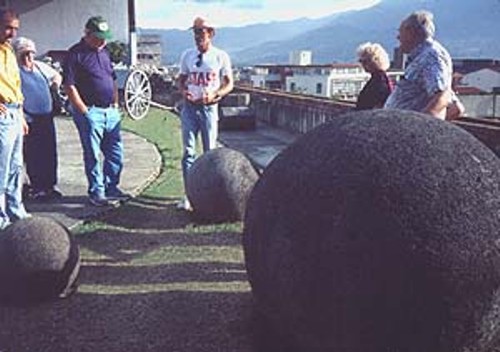
Tridestih godina ovog stoljeća Američka kompanija United Fruit Company počela je krčit gustu džunglu u delti rijeke da bi posadila plantaže banana. Kad su radnici sjekući i paleći, probijali put kroz šume naišli su na desetke kamenih lopti od kojih su neke bile oblikom savršene kugle. Bilo ih je promjera od nekoliko inča do osam stopa ( 2.4 metra ) a najmanje veličine teniske lopte teže samo nekoliko funti, dok je naveća bila težine nešto preko 16 tona...
Danas su orijaške kugle Kostarike i dalje neriješena tajna, iako mnoge ukrašavaju vrtove i poslovnu četvrt glavnog grada San Josea. Pronaći ključ njihovog značenja za sada niko nije uradio, ali ova istrazivanja su mozda rjesenje ove tajne. Sve o tome citaj ovdje na engleskom jeziku.
All images below are borrowed from web site www.alternativnahistorija.com
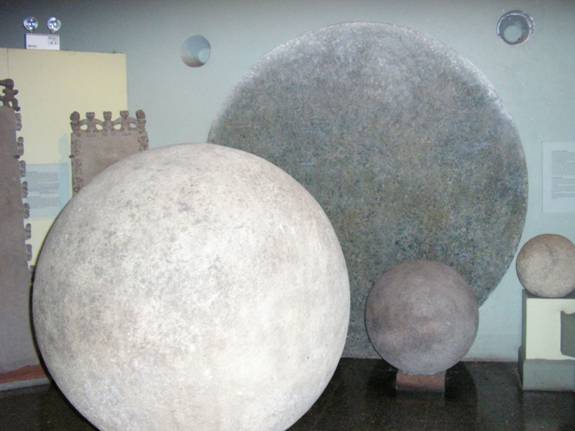
Kamene kugle Nacionalni muzej, San Jose, Kostarika.
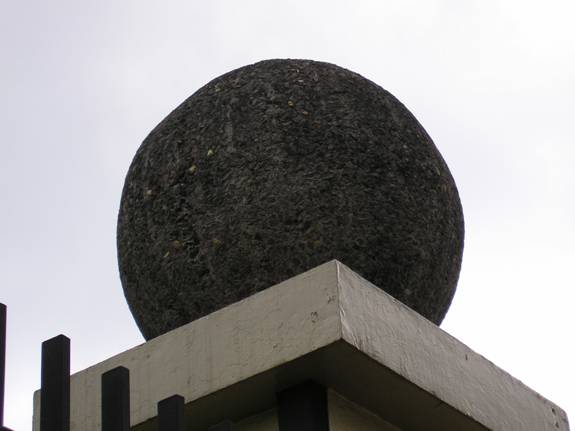
Kamena kugla na ulazu u parlament Kostarike, San Jose. Kostarika.
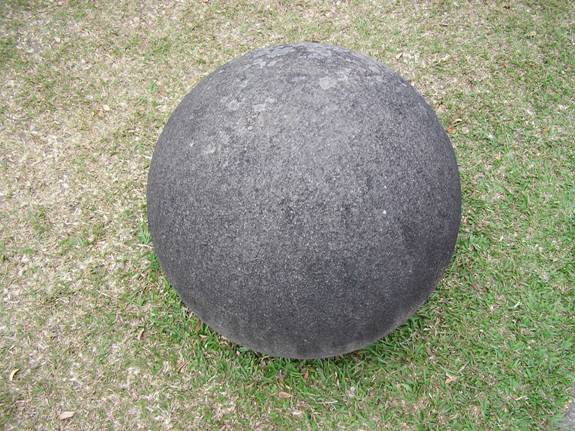
Kamena kugla, Nacionalni muzej, San Jose, Kostarika.
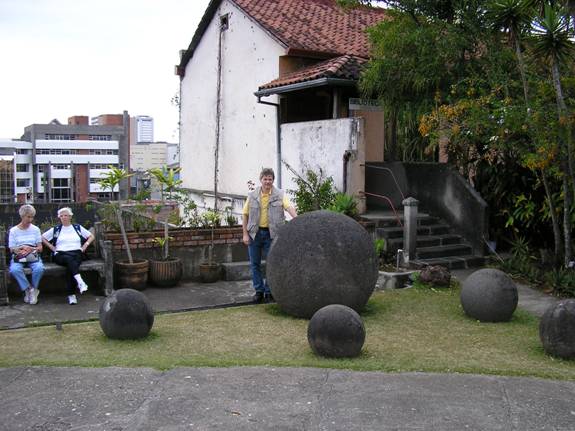
Kamene kugle, Nacionalni muzej, San Jose, Kostarika.
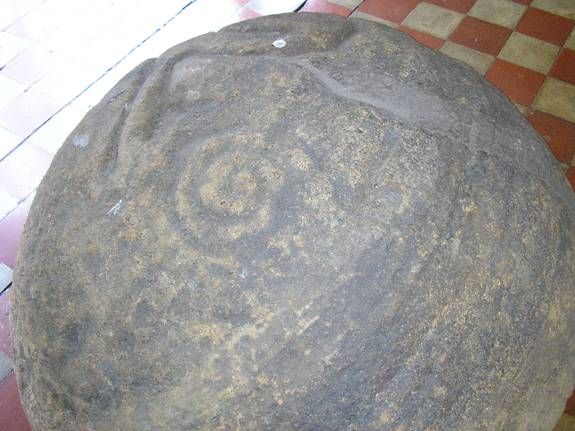
Uklesani petroglif Nacionalni muzej, San Jose, Kostarika.
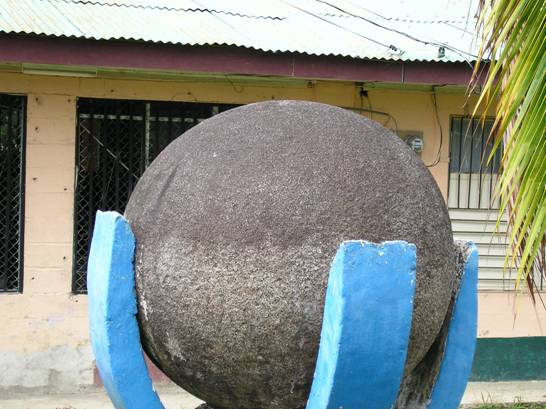
Kamena kugla Palmar Norte, južna Kostarika.
Lijeva slika je kamena kugla u Palmar Sur, Kostarika. Desna slika je kamena kugla u Ponikve, Vares. BiH. Koja je veza?
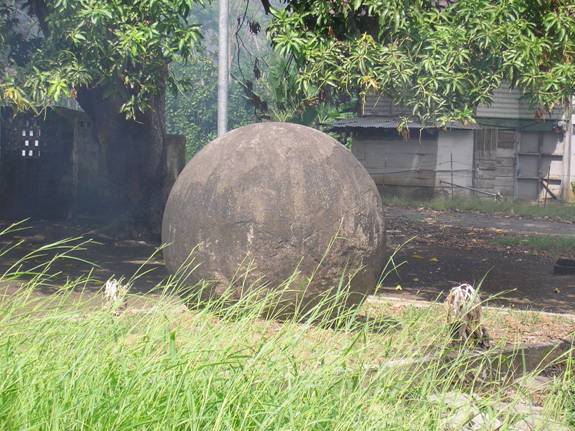
Left image is stone ball in Palmar Sur, Costa Rika. Right image is stone ball in Ponikve, Vares. BiH. What is connection?
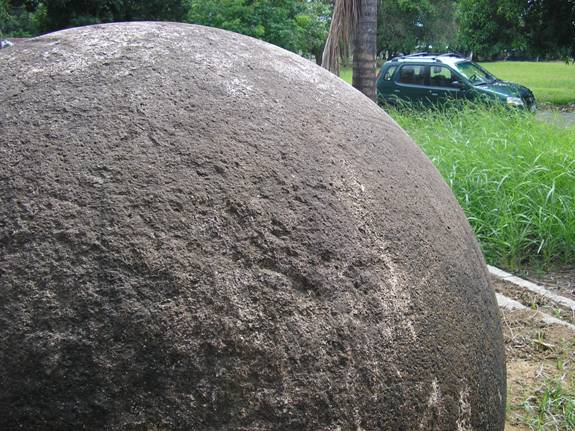
Detalj kamene kugle Palmar Sur, Kostarika.
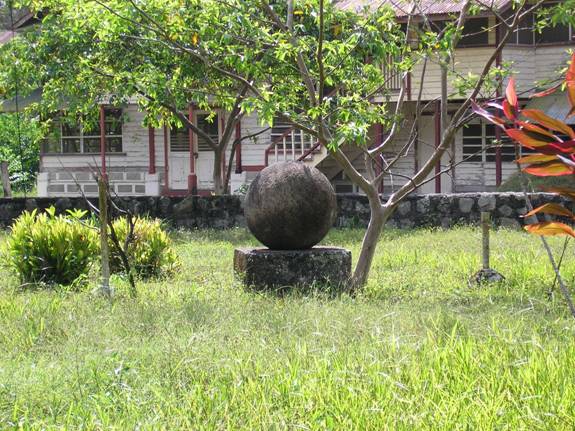
Kamena kugla ispred kuce, Palmar Sur, Kostarika.
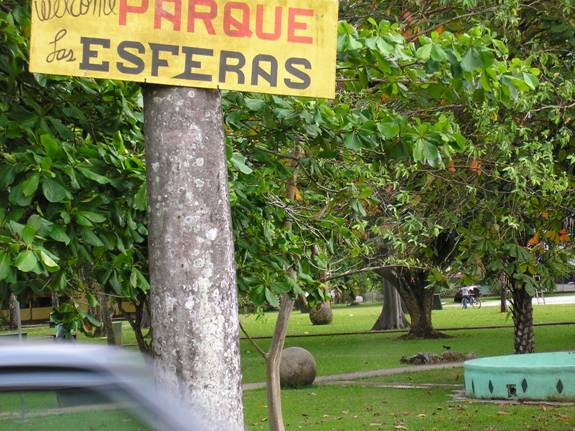
Gradski park Palmar Sur ima desetak kugli visine od jedan i po do dva metra.
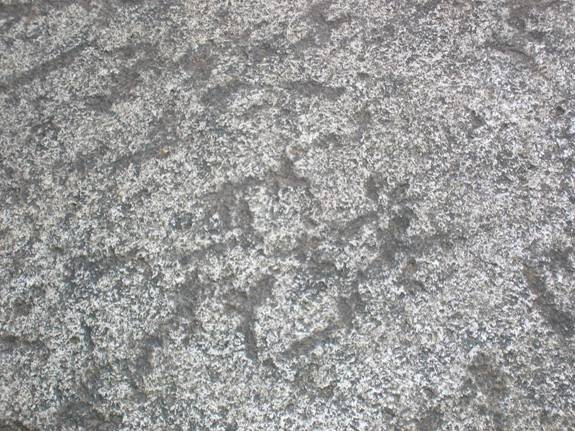
Površina jedne kamene kugle, Palmar Sur, Kostarika.
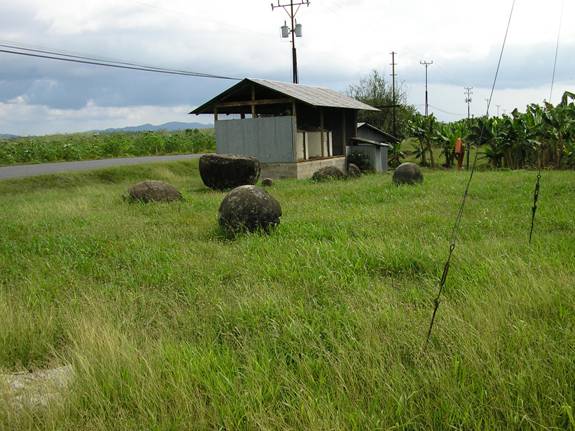
Locatin: Finca 5, oblast, južna Kostarika.
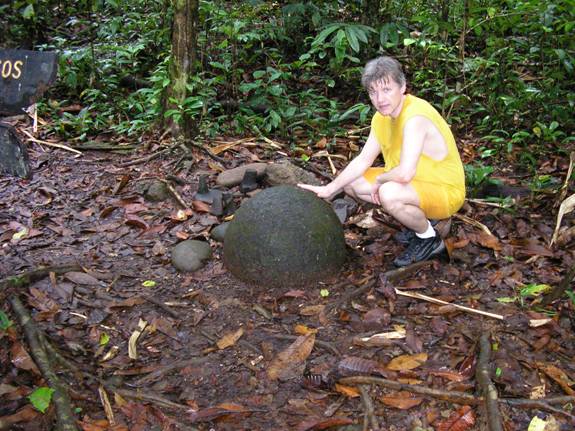
Kamena kugla, otoka Isla del Cano, Kostarika.
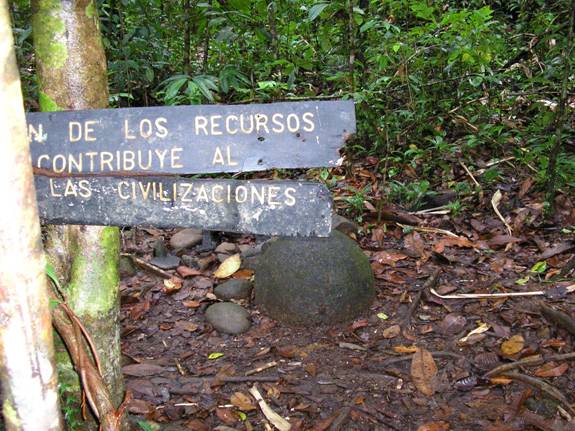
Kamena kugla, otoka Isla del Cano, Kostarika.
All images below are borrowed from web site http://www.ku.edu/~hoopes/balls/gallery.htm
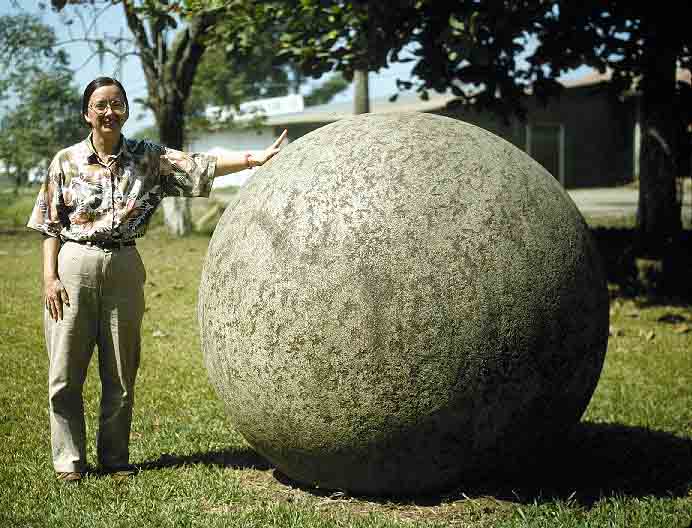
Stone Ball in Plaza at Palmar Sur, Costa Rica
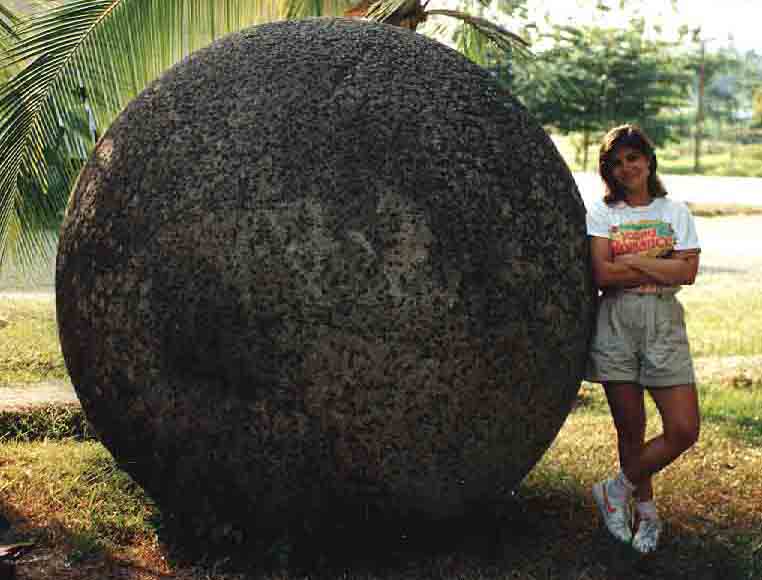
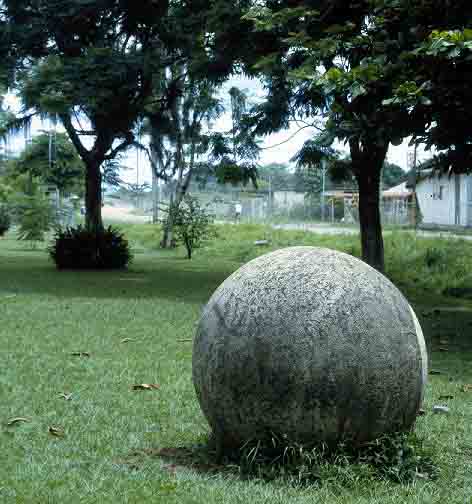
Ball in Plaza, Palmar Sur, Costa Rica
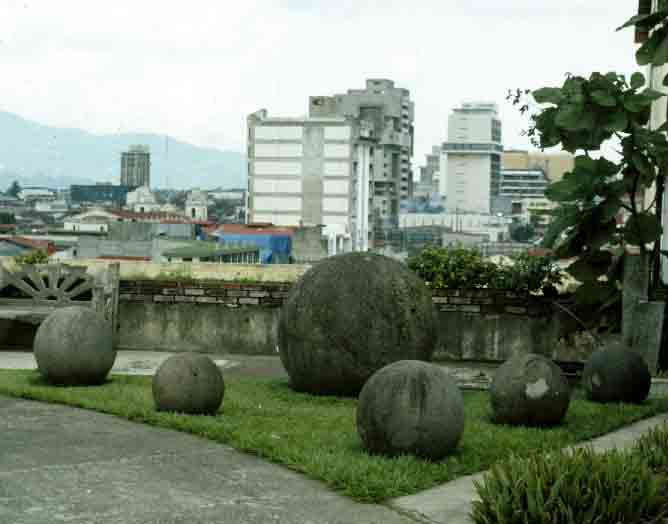
Stone Ball National Museum, Costa Rica.
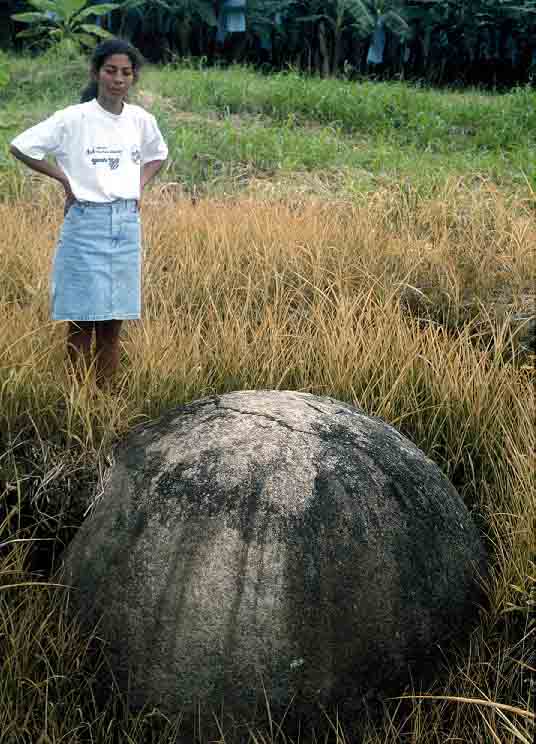
Archaeologist Ifigenia Quintanilla with Stone Ball
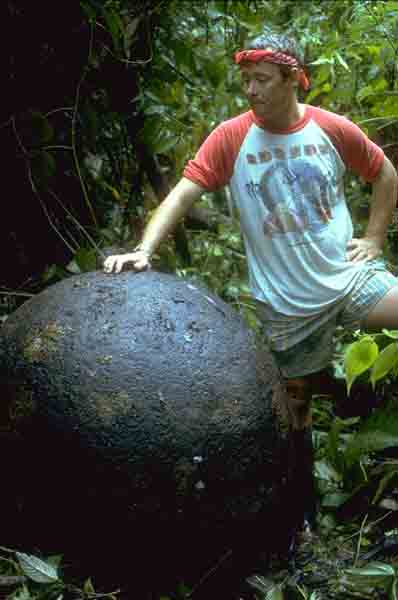
Ball in Ravine Near Golfito, Costa Rica
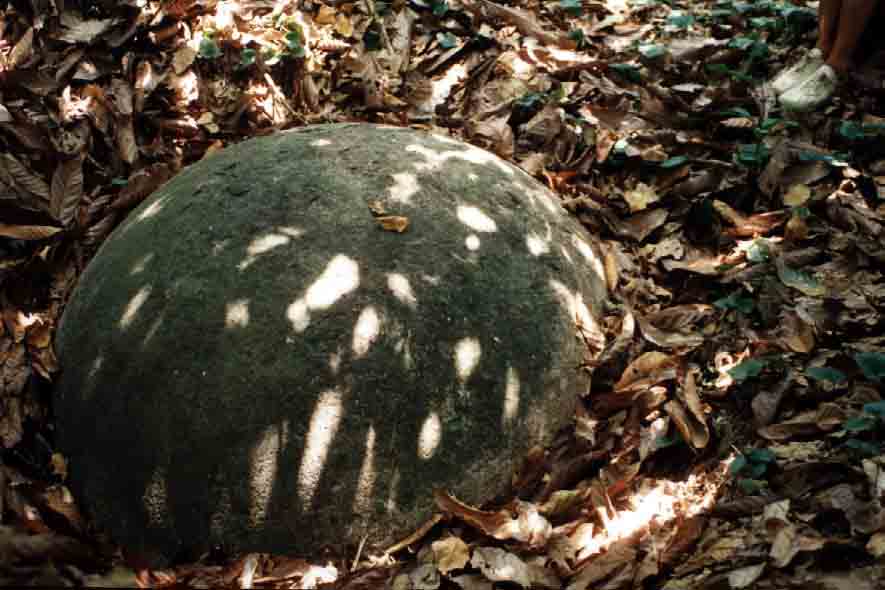
Stone Ball in situ Under Cacao Trees.
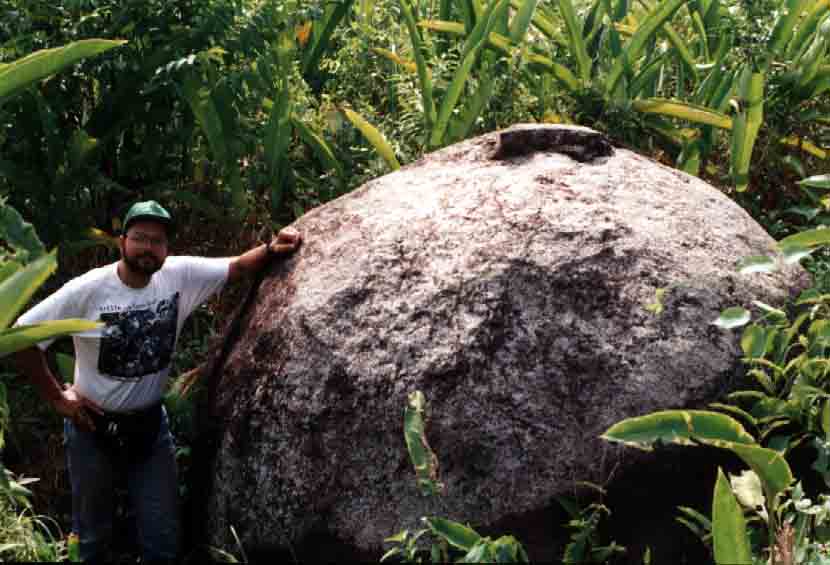
John W. Hoopes with Largest Known Ball.
All images and text below are borrowed from web site http://www.crystalinks.com/costarica.html
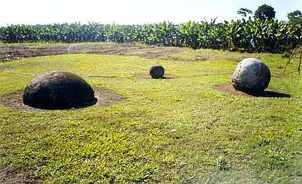
One of the strangest mysteries in archaeology was discovered in the Diquis Delta of Costa Rica. Since the 1930s, hundreds of stone balls have been documented, ranging in size from a few centimetres to over two meters in diameter. Almost all of them are made of granodiorite, a hard, igneous stone.
These objects are monolithic sculptures made by human hands.
Stone-sphere sizes range from an inch to 9 feet in diameter weighing 30 tons. Many are near-perfect spheres, within two millimeters. Three large and aligned spheres point to Easter Island - which has its own collection of spheres.
The stones may have come from the bed of the Térraba River, to where they were transported by natural processes from sources of parent material in the Talamanca mountains. Unfinished spheres were never found. Like the monoliths of the Old World, the Costa Rican quarry was more than 50 miles away from the final resting place of these mysteries.
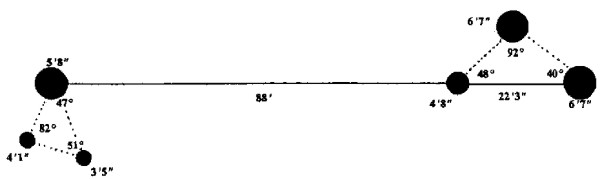
The stone spheres have been found in clusters of up to twenty, and often in geometric patterns such as triangles, rectangles or straight lines. Such alignments often point to the earth1s magnetic north. A large number of the spheres have been located in the Diquis River Delta, with other popular sites being the southern cities of Palmar, Sur, Buenos Aires and Golfito as well as in the province of Guanacaste to the north and in the central valley. Archaeologists have been able to date the stones by the artefacts that have been found lying alongside them. Some of them have, thus, been dated as far back as 400 B.C.E.
The majority of them have, however, been dated between 800 and 1200 B.C.E. Many of these stones have been found near the remains of dwellings and in close proximity to grave sites. Some believed that the stones contained some hidden treasures and a few of them have been smashed to try to get at this supposed treasure. None has been forthcoming, however. Despite these losses, however, the National museum of Costa Rica has catalogued some one hundred and thirty existing stone spheres. However, many of them are not catalogued. This is because of the fact that many of the spheres have been removed from their original sites and used as ornaments in private homes, gardens and churches. Clearly, there are also many stones that still lie undiscovered.
Just how the ancient people of Costa Rica made these perfectly cylindrical stone spheres, remains largely a mystery. It is clear that some sort of mechanical procedure was needed in order to attain the precision displayed by the stones. Statues emanating from the same period show that the ancient Costa Ricans were very skilled sculptors. The existence of gold artefacts from about 800 C.E. also show that the people living at that time were experienced at working with high temperatures. It is, therefore, believed by some researchers that the stones were moulded into their perfectly cylindrical shapes by extreme heating followed by cooling, to remove any outer layers of rock. The rocks could have been finished by polishing with sand or leather.
The larger stones were clearly crafted by the most skilled sculptors. These stones are so perfectly shaped that the tape and plumb bob measurements of diameters reveal no imperfections. This shows that the makers of the stones must have had a degree of mathematical ability as well as advanced knowledge of stone carving and the use of tools. The ancient Costa Ricans, however, had no written language. There is, therefore, no written record of just how they made the stones spheres.
Many of the spheres are made of granite like rock. Yet the granite rock quarries were often twenty five to thirty miles away from the location of the largest stone spheres. How, then, did the sculptors move such heavy stones? Some of the stones, after all weigh sixteen tons. If the granites rocks were moved before they were sculpted, then the nine foot cube that would be needed to sculpt a sphere eight feet in diameter would weigh a whopping twenty four tons. To even get such a massive stone to it1s final location the natives would have to cut large tracks through very dense bush.
Other stones were made of coquina, a limestone like material which is found on the beaches near the mouth of the Diquis river. This stone was probably rafted up river about thirty miles to it1s final location. Some of these stone spheres have been found on Cano Island, which is located about twelve miles off the Pacific coast. As to why the stone spheres were made, there are, as yet, no explanations. It is possible that they were used as a symbol of rank or importance for a tribal chief or a village. Then again, they may have been used as religious or ceremonial symbols. Perhaps further study by archaeologists will unravel the secrets of the stone spheres of Costa Rica.
Below article from web page http://english.pravda.ru/society/2003/03/28/45239.html
Did Giants Play Balls?
It was reported on January 17, 2003 that after a mysterious object flew over
taiga, microscopic balls of some strange origin were discovered in land digging in the
city of Dalnegorsk. It is still unknown whether that was a meteorite, a fragment of a
missile or a UFO. Doctor of technical science, academician in the Russian Academy of
natural sciences and honorary member of the NY Academy of Sciences, Anatoly Garshits says
that similar, but huge balls have been found in different parts of the world. They are
called balls of antique gods. The scientists think that this fantastic story can be
explained quite logically.
Anatoly Garshits told that a very interesting discovery had been made in the Central
American republic of Costa Rica in the early 1940s. Workers who deforested the tropical
jungle for future banana plantations suddenly came across giant stone sculptures of a
regular globe form. The largest of them weighted about 16 tons. The smallest balls were
not bigger than a ball with which children usually play, it was just 10 centimeters in
diameter. The balls were placed in groups, each group included from three to fifty balls.
The artifacts were called "balls with which gods played." When scientists looked
at the balls from board of a plane, the scene looked like a page from a geometry textbook.
Rows of huge stone balls made up gigantic triangles, squares, circles and other more
intricate figures of a regular form as if they were oriented especially according to the
part of the world. And this scene stretched to dozens of kilometers! Who did it, when and
why?
According to the original estimates made by archeologists, the age of the balls was
referred to the 14-15th centuries of the Common Era when forefathers of Indians, Inca and
Maya, were living in those places. It's hardly believable that they could make lots of
such balls without special instruments although cultures of the people were rather
developed. Is it possible that some other civilization unknown to science lived on the
territory of Costa Rica?
To investigate the issue intensive digging was started, which in their turn revealed more
unbelievable facts. First of all, in those places where the huge balls were discovered no
articles belonging to human life such as pots, instruments or decorations could be found.
So, people could have no connection with the stone balls. Second, it turned out that the
age of the artifacts was even older, different hypotheses said it could be from 100.000 to
500.000 years.
As the stone balls were grouped in forms resembling celestial constellations, it was
suggested that they were probably astronomic observatories, a planetarium built by
representatives of some other civilization. It was also suggested the place could be a
ritual or war assemblage of some giant warriors. One hypothesis became the most popular:
it said that guests from the space picked out the place for their cosmodrome, and the
stone balls were limitation lines and guiding lines to determine their course. Many
researchers took modern equipment that existed by that moment and agreed to wait for years
till guests from the space would come to that place.
Unfortunately nobody arrived in that place. But later information appeared that similar
stone sculptures were found in Mexico, Brazil, the USA, Australia, Nepal, Egypt,
Kazakhstan, in Russia's Altay and even in Franz Joseph Land. Later, they were found in the
1970s in Crimea and in the Caucasus.
One of scientists investigating the phenomenon, doctor of biological sciences Valentin
Glazkov tells that incredible rumors were spread about hundreds of strange stone balls.
For example, it was reported that there was some "anomalous field" around the
balls where electrical appliances went mad, watch stopped and behavior of live organisms
became abnormal. People visiting the zone where the balls were placed registered rapid
pulse, disordered sleep and lapses of memory. Many sensational statements were made at
that time in connection with the balls. For example, it was said the stone balls were
tuned in particular waves to transmit information to the space; those who managed to
establish a contact correctly could be healed of any disease and could also have any wish
fulfilled. Such incredible statements became an incentive for more and more people wishing
to visit the site where the balls were placed. The site became the place of mass
pilgrimage. And, is it sometimes happens, some people actually were healed of their
diseases and others were unbelievably lucky after the visited the place.
Three large balls found at the end of the 1970s in Guadalahara were delivered to the
American University in the state of New York, where they were cut and thoroughly analyzed.
No traces of material culture were found inside of the balls. And scientists declared that
the artifacts couldn't be made by human beings. The internal structure of the balls was
complicated; it was a coiled alloy of rare-earth metals. Chemical properties of these
alloys were actually mysterious.
Nevertheless, geologists said that the balls were highly likely of natural origin. They
had been created not by gods or creatures from the space; they appeared as a result of
effect of such natural factors as water, wind and rain that had been washing ashes and
ground for thousands of years. Obviously, several volcanoes awaked on the Central American
territory 25-40 million years ago; convulsions of these volcanoes caused terrible
earthquakes. Lava and red-hot ashes covered large territories. Glassy particles ejected
from the volcanoes started making spheres which further turned into balls.
A ball of a regular form can appear only if crystallization goes equally in all
directions. Leading research assistant of the Central Research Geology Institute of
rare-earth and non-ferrous metals Yelena Matveyeva says that the balls emerged on the
surface of the planet as a result of exfoliation, weathering that operates in regions with
large daily overfall. Similar balls are found under the surface where temperatures are
stable.
However, all scientists say that the phenomenon hasn't been solved yet. Some granite balls
cannot be described with this theory; it seems as if they were polished by humans. It's
not clear what giants made the huge balls and what tiny people made those small balls
discovered in Dalnegorsk mentioned above. Can they be special signs sent to people living
at present which we still cannot unriddle?
Natalia Leskova
Material based on publications in Russian newspapers
Translated by Maria Gousseva
PAŽNJA SVIM KORISNICIMA OVOG MATERIJALA, SVE STO JE NAPISANO I SVI CRTEŽI SU COPYRIGHT
Copyright C 1952-2005. All rights reserved. Rudolf Bosnjak.